
11 Best Care Coordination Softwares for US Healthcare 2026
11 Best Care Coordination Softwares for US Healthcare 2026
AI is changing the game of Care coordination as exceptions and complexity can increasingly be automated. Care coordination software in 2026 needs to execute work autonomously, support complex data pipelines, and prevent high rates of escalation requests in order to unlock the next frontier of value. In the US market, leaders are adopting agentic AI to offload administrative bottlenecks like benefit verification and prior authorization, speeding access to therapy and relieving overextended teams.
This guide compares 11 notable platforms for US providers. You will see how they approach EHR interoperability, information sharing, patient engagement, and automation of complex workflows. We also include a practical evaluation checklist and real-world scenarios. If your priority is faster therapy starts and lower administrative burden, note where agentic AI and bidirectional EHR write-back appear, then validate them in a live pilot.
Key Takeaways
US providers face a projected shortfall of over 3.2 million workers by 2026, so software must act as a force multiplier [1].
CMS aims for 100% of Traditional Medicare beneficiaries in accountable care relationships by 2030, increasing demand for real-time coordination tools [2].
Neon Health reports 300% ROI on call center automation, 70% labor cost reduction, and 2x faster benefit verification, accelerating time-to-therapy for patient access workflows [3].
What to Look for in a Care Coordination Platform
Novel software systems should not add any overhead or additional friction to healthcare providers. Agentic AI that executes tasks end to end is the ideal end-state for software solutions in 2026. Ask vendors to demonstrate autonomous actions like navigating payer phone trees or submitting forms, not just messaging or summaries [6].
Bidirectional interoperability. Confirm real-time APIs and EHR write-back so tasks and notes flow automatically into Epic or Cerner to avoid copy-paste and silos [7].
Security and compliance. Seek HIPAA alignment, SOC 2 Type II, and HITRUST for rigorous risk controls trusted by US health systems [8].
Omnichannel engagement. Look for AI-managed outreach that can triage and respond via SMS, email, and voice, tied to real-time admission and discharge events through live ADT (Admission, Discharge, Transfer) feeds [9]. Certains FDA regulations, like 21 CFR Part 11, may also apply.
2026’s Top 11 Care Coordination Software Solutions
Below are 11 notable platforms US providers are evaluating in 2026. Each summary highlights focus areas, integration posture, and value-based care support. Use these profiles with the evaluation checklist to align choices to your bottlenecks.
1) Neon Health
Best For:
Specialty clinics, hubs, pharmaceutical manufacturers, and health systems needing to accelerate patient access.
Key Features:
AI-first automation focused on patient access and reducing administrative friction
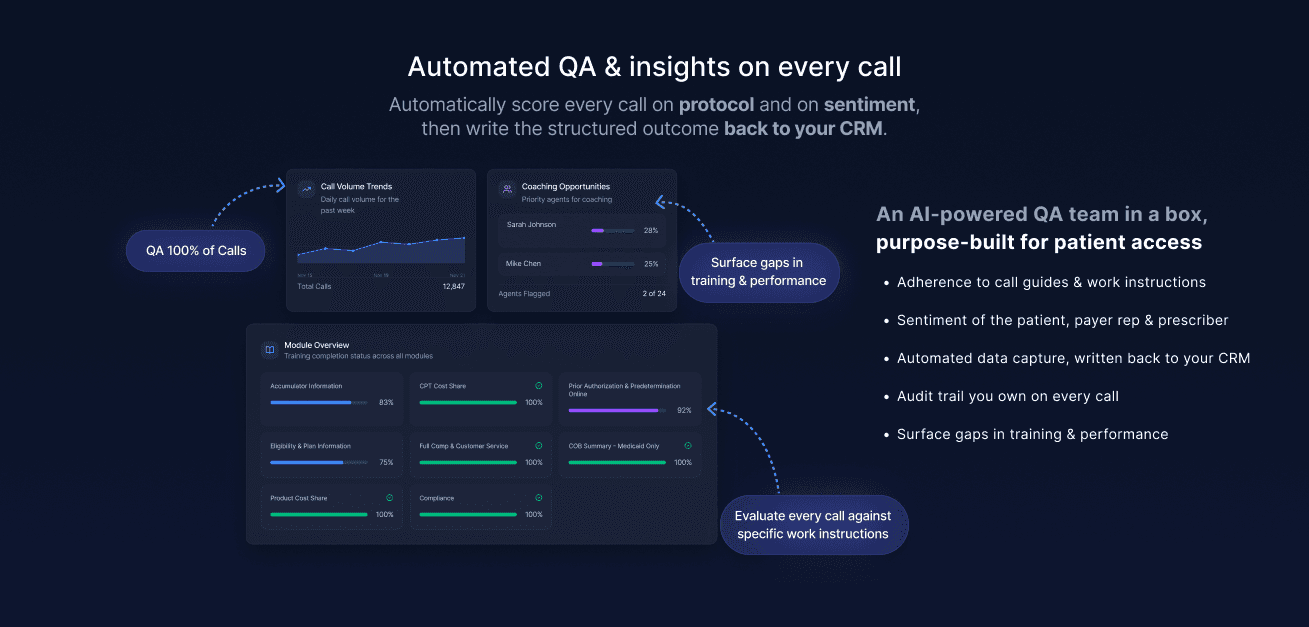
Agents handle enrollment, benefit verification and prior authorization, REMS, and adherence support, reducing manual touchpoints by up to 99%
Gets through patient access twice as fast a human teams
Reported outcomes: 300% ROI, 70% labor cost reduction, and 50% faster time-to-therapy in a rheumatology setting [3][3]
Considerations:
Validate agentic automation in your specific workflow
2) Epic
Best For:
Large Integrated Delivery Networks (IDNs, large health systems combining hospitals, clinics, and providers) seeking one-vendor consolidation
Key Features:
Enterprise EHR with built-in care management and team collaboration
Native registries, referrals, and in-basket workflows
Considerations:
Assess bidirectional integration with external tools for outreach and prior authorization when Epic modules are not sufficient
3) Cerner, now Oracle Health
Best For:
Multi-hospital systems and regional networks
Key Features:
Enterprise EHR with population health capabilities and network connectivity
Considerations:
Assess real-time interoperability with case management and external agentic tools to automate handoffs
4) Athenahealth
Best For:
Ambulatory and independent practices coordinating referrals and chronic care in outpatient settings
Key Features:
Cloud EHR with integrated scheduling and billing
Considerations:
Validate integration depth with external coordination platforms for automated benefits, authorization, and outreach
5) WellSky
Best For:
Post-acute and community care settings
Key Features:
Widely used for referral management and transitions across home health, hospice, and community services
Considerations:
Assess interoperability with acute EHRs and ADT (Admission, Discharge, Transfer) feeds for cross-setting coordination
6) Netsmart
Best For:
Behavioral health and human services organizations managing care transitions between hospitals, clinics, and community agencies
Key Features:
Supports care transitions and coordination across multiple settings
Considerations:
Verify data exchange and task automation with external systems for timely follow-up and documentation
7) ThoroughCare
Best For:
Ambulatory care teams managing longitudinal care plans and outreach cadences, especially in Chronic Care Management (CCM) and Remote Patient Monitoring (RPM) programs
Key Features:
Focused on care coordination for CCM and RPM programs
Considerations:
Validate reporting support for value-based contracts and integration with your EHR
8) Birdie
Best For:
Home-based care coordination workflows
Key Features:
Recognized for care planning and team communication in home care contexts
Considerations:
Confirm US regulatory alignment and integration with your EHR stack if used in the United States
9) blueBriX
Best For:
Teams aligning to value-based care (VBC) metrics and cross-functional collaboration
Key Features:
Enables value-based care and coordination workflows
Considerations:
Validate bidirectional APIs and analytics that support quality and contract performance
10) CarePlanner
Best For:
Home care organizations needing scheduling, rostering, and team coordination
Key Features:
Supports home care scheduling, rostering, and team coordination
Considerations:
Assess interoperability with clinical systems and downstream reporting needs
Ensure patient communication features meet your engagement model
11) Innovaccer
Best For:
Networks focused on data activation and value-based care analytics
Key Features:
Delivers population health registries, risk stratification, and quality reporting
Considerations:
Pair with agentic execution tools if you need automation across administrative workflows [10]
Checklist: How to Evaluate and Compare Care Coordination Tools
Agentic capability: Can the platform execute tasks like payer calls and portal submissions without human intervention [5]?
EHR write-back: Does it push notes, status, and tasks into Epic or Cerner automatically to prevent duplicate work [7]?
Real-time signals: Are ADT (Admission, Discharge, Transfer) and other event feeds live, so outreach and transitions fire immediately, not in batch [9]?
ROI proof: Ask for measured outcomes. Neon Health reports 300% ROI and 70% labor cost reduction in access workflows [3].
Security: Require HIPAA alignment, SOC 2 Type II, and HITRUST certification before deployment in production environments [8].
Real-World Scenarios: US Care Teams Streamlining Workflows
Primary and specialty access. A rheumatology clinic used Neon Health agents to automate prior authorization and benefits, cutting time-to-therapy by 50% and supporting a reported 300% ROI [3].
Hospital discharge and readmission risk. An ACO used real-time alerts to track a heart failure discharge and prevent readmission, avoiding $15,000 in costs [5].
Referral backlogs during staffing shortages. A health system routed referral queues to autonomous agents, maintaining throughput during a 15% staffing gap [11].
Next Steps: Choosing the Right Platform for Your Organization
Map your bottlenecks first. If access tasks slow therapy starts, prioritize agentic automation for benefits and prior authorization. If clinical orchestration or population analytics is the gap, evaluate those categories accordingly.
Audit integrations. Confirm live connections to your EHR and network feeds, including real-time ADT and bidirectional write-back. Do not rely on CSV exports or manual reconciliation when VBC performance is on the line.
Run a proof of concept. Request a live demo where AI agents execute end-to-end tasks, such as traversing a payer IVR, gathering benefits, and writing back outcomes. Ask Neon Health to demonstrate agents offloading phone and paperwork burden in your workflow [3].
Conclusion
In 2026, the winning care coordination stack pairs real-time data with agentic execution. US teams need platforms that write back to the EHR, engage patients across channels, and autonomously complete administrative work. The labor gap is widening and VBC demands are intensifying, so time-to-value and security matter as much as feature lists.
If access bottlenecks slow therapy starts, prioritize an agentic approach. Neon Health reports 300% ROI, 70% labor cost reduction, and 2x faster benefit verification, helping clinics cut time-to-therapy significantly [3]. Request a Neon Health demo to see agents work your real payers and patient journeys, then compare outcomes to your current baseline.
References
https://staffdna.com/healthcare-staffing-trends-that-will-shape-2026/
https://www.healthitanswers.net/targeting-4-more-years-and-scaling-value-based-care-models-in-2026/
https://www.threeflow.com/resources/blogs/hipaa-vs-soc-2-vs-hitrust-what-brokers-need-to-know
https://scouts.yutori.com/2ad3f15a-afac-4abb-b8e5-e76a95f2eb6c
https://silverlinecrm.com/blog/healthcare/2026-salesforce-trends-enhancing-engagement-in-healthcare/
AI is changing the game of Care coordination as exceptions and complexity can increasingly be automated. Care coordination software in 2026 needs to execute work autonomously, support complex data pipelines, and prevent high rates of escalation requests in order to unlock the next frontier of value. In the US market, leaders are adopting agentic AI to offload administrative bottlenecks like benefit verification and prior authorization, speeding access to therapy and relieving overextended teams.
This guide compares 11 notable platforms for US providers. You will see how they approach EHR interoperability, information sharing, patient engagement, and automation of complex workflows. We also include a practical evaluation checklist and real-world scenarios. If your priority is faster therapy starts and lower administrative burden, note where agentic AI and bidirectional EHR write-back appear, then validate them in a live pilot.
Key Takeaways
US providers face a projected shortfall of over 3.2 million workers by 2026, so software must act as a force multiplier [1].
CMS aims for 100% of Traditional Medicare beneficiaries in accountable care relationships by 2030, increasing demand for real-time coordination tools [2].
Neon Health reports 300% ROI on call center automation, 70% labor cost reduction, and 2x faster benefit verification, accelerating time-to-therapy for patient access workflows [3].
What to Look for in a Care Coordination Platform
Novel software systems should not add any overhead or additional friction to healthcare providers. Agentic AI that executes tasks end to end is the ideal end-state for software solutions in 2026. Ask vendors to demonstrate autonomous actions like navigating payer phone trees or submitting forms, not just messaging or summaries [6].
Bidirectional interoperability. Confirm real-time APIs and EHR write-back so tasks and notes flow automatically into Epic or Cerner to avoid copy-paste and silos [7].
Security and compliance. Seek HIPAA alignment, SOC 2 Type II, and HITRUST for rigorous risk controls trusted by US health systems [8].
Omnichannel engagement. Look for AI-managed outreach that can triage and respond via SMS, email, and voice, tied to real-time admission and discharge events through live ADT (Admission, Discharge, Transfer) feeds [9]. Certains FDA regulations, like 21 CFR Part 11, may also apply.
2026’s Top 11 Care Coordination Software Solutions
Below are 11 notable platforms US providers are evaluating in 2026. Each summary highlights focus areas, integration posture, and value-based care support. Use these profiles with the evaluation checklist to align choices to your bottlenecks.
1) Neon Health
Best For:
Specialty clinics, hubs, pharmaceutical manufacturers, and health systems needing to accelerate patient access.
Key Features:
AI-first automation focused on patient access and reducing administrative friction
Agents handle enrollment, benefit verification and prior authorization, REMS, and adherence support, reducing manual touchpoints by up to 99%
Gets through patient access twice as fast a human teams
Reported outcomes: 300% ROI, 70% labor cost reduction, and 50% faster time-to-therapy in a rheumatology setting [3][3]
Considerations:
Validate agentic automation in your specific workflow
2) Epic
Best For:
Large Integrated Delivery Networks (IDNs, large health systems combining hospitals, clinics, and providers) seeking one-vendor consolidation
Key Features:
Enterprise EHR with built-in care management and team collaboration
Native registries, referrals, and in-basket workflows
Considerations:
Assess bidirectional integration with external tools for outreach and prior authorization when Epic modules are not sufficient
3) Cerner, now Oracle Health
Best For:
Multi-hospital systems and regional networks
Key Features:
Enterprise EHR with population health capabilities and network connectivity
Considerations:
Assess real-time interoperability with case management and external agentic tools to automate handoffs
4) Athenahealth
Best For:
Ambulatory and independent practices coordinating referrals and chronic care in outpatient settings
Key Features:
Cloud EHR with integrated scheduling and billing
Considerations:
Validate integration depth with external coordination platforms for automated benefits, authorization, and outreach
5) WellSky
Best For:
Post-acute and community care settings
Key Features:
Widely used for referral management and transitions across home health, hospice, and community services
Considerations:
Assess interoperability with acute EHRs and ADT (Admission, Discharge, Transfer) feeds for cross-setting coordination
6) Netsmart
Best For:
Behavioral health and human services organizations managing care transitions between hospitals, clinics, and community agencies
Key Features:
Supports care transitions and coordination across multiple settings
Considerations:
Verify data exchange and task automation with external systems for timely follow-up and documentation
7) ThoroughCare
Best For:
Ambulatory care teams managing longitudinal care plans and outreach cadences, especially in Chronic Care Management (CCM) and Remote Patient Monitoring (RPM) programs
Key Features:
Focused on care coordination for CCM and RPM programs
Considerations:
Validate reporting support for value-based contracts and integration with your EHR
8) Birdie
Best For:
Home-based care coordination workflows
Key Features:
Recognized for care planning and team communication in home care contexts
Considerations:
Confirm US regulatory alignment and integration with your EHR stack if used in the United States
9) blueBriX
Best For:
Teams aligning to value-based care (VBC) metrics and cross-functional collaboration
Key Features:
Enables value-based care and coordination workflows
Considerations:
Validate bidirectional APIs and analytics that support quality and contract performance
10) CarePlanner
Best For:
Home care organizations needing scheduling, rostering, and team coordination
Key Features:
Supports home care scheduling, rostering, and team coordination
Considerations:
Assess interoperability with clinical systems and downstream reporting needs
Ensure patient communication features meet your engagement model
11) Innovaccer
Best For:
Networks focused on data activation and value-based care analytics
Key Features:
Delivers population health registries, risk stratification, and quality reporting
Considerations:
Pair with agentic execution tools if you need automation across administrative workflows [10]
Checklist: How to Evaluate and Compare Care Coordination Tools
Agentic capability: Can the platform execute tasks like payer calls and portal submissions without human intervention [5]?
EHR write-back: Does it push notes, status, and tasks into Epic or Cerner automatically to prevent duplicate work [7]?
Real-time signals: Are ADT (Admission, Discharge, Transfer) and other event feeds live, so outreach and transitions fire immediately, not in batch [9]?
ROI proof: Ask for measured outcomes. Neon Health reports 300% ROI and 70% labor cost reduction in access workflows [3].
Security: Require HIPAA alignment, SOC 2 Type II, and HITRUST certification before deployment in production environments [8].
Real-World Scenarios: US Care Teams Streamlining Workflows
Primary and specialty access. A rheumatology clinic used Neon Health agents to automate prior authorization and benefits, cutting time-to-therapy by 50% and supporting a reported 300% ROI [3].
Hospital discharge and readmission risk. An ACO used real-time alerts to track a heart failure discharge and prevent readmission, avoiding $15,000 in costs [5].
Referral backlogs during staffing shortages. A health system routed referral queues to autonomous agents, maintaining throughput during a 15% staffing gap [11].
Next Steps: Choosing the Right Platform for Your Organization
Map your bottlenecks first. If access tasks slow therapy starts, prioritize agentic automation for benefits and prior authorization. If clinical orchestration or population analytics is the gap, evaluate those categories accordingly.
Audit integrations. Confirm live connections to your EHR and network feeds, including real-time ADT and bidirectional write-back. Do not rely on CSV exports or manual reconciliation when VBC performance is on the line.
Run a proof of concept. Request a live demo where AI agents execute end-to-end tasks, such as traversing a payer IVR, gathering benefits, and writing back outcomes. Ask Neon Health to demonstrate agents offloading phone and paperwork burden in your workflow [3].
Conclusion
In 2026, the winning care coordination stack pairs real-time data with agentic execution. US teams need platforms that write back to the EHR, engage patients across channels, and autonomously complete administrative work. The labor gap is widening and VBC demands are intensifying, so time-to-value and security matter as much as feature lists.
If access bottlenecks slow therapy starts, prioritize an agentic approach. Neon Health reports 300% ROI, 70% labor cost reduction, and 2x faster benefit verification, helping clinics cut time-to-therapy significantly [3]. Request a Neon Health demo to see agents work your real payers and patient journeys, then compare outcomes to your current baseline.
References
https://staffdna.com/healthcare-staffing-trends-that-will-shape-2026/
https://www.healthitanswers.net/targeting-4-more-years-and-scaling-value-based-care-models-in-2026/
https://www.threeflow.com/resources/blogs/hipaa-vs-soc-2-vs-hitrust-what-brokers-need-to-know
https://scouts.yutori.com/2ad3f15a-afac-4abb-b8e5-e76a95f2eb6c
https://silverlinecrm.com/blog/healthcare/2026-salesforce-trends-enhancing-engagement-in-healthcare/
Related articles
Related articles


Ready to transform Patient Access?
Ready to transform Patient Access?
NEWSLETTER
@ 2026 Neon Health (Belay, Inc).
AI-powered patient access automation
for leading pharma enterprises.
NEWSLETTER
@ 2026 Neon Health (Belay, Inc).
AI-powered patient access automation for leading pharma enterprises.
NEWSLETTER
@ 2026 Neon Health (Belay, Inc).
AI-powered patient access automation
for leading pharma enterprises.