
Patient Hub Platforms Compared: CareMetx, AssistRx, Phil, Lash Group, and Alternatives
Patient Hub Platforms Compared: CareMetx, AssistRx, Phil, Lash Group, and Alternatives
Specialty medications now account for roughly 55% of all U.S. drug spending while representing just 2-3% of prescription volume. That concentration means everything in patient access has to work. Benefit verification. Prior authorization. Financial assistance enrollment. Onboarding. Adherence monitoring. When any step breaks down, patients do not start therapy.
The data on how often it breaks down is sobering. According to BrightInsight and Claritas Rx, only 62% of specialty prescriptions reach a paid fill across 85 specialty brands studied. Nearly 40% never make it to the patient. IQVIA data shows the problem intensifies with cost: abandonment rates exceed 60% when patients face more than $500 in out-of-pocket expenses. With specialty drug spending exceeding $301 billion as of 2021 (IQVIA), the revenue at risk from unfilled prescriptions runs well into the hundreds of billions of dollars.
Patient hub platforms exist to close this gap. They coordinate the administrative workflows between manufacturers, payers, providers, pharmacies, and patients so that prescriptions actually reach the people who need them. The global pharma hub and patient access support services market was valued at $3.24 billion in 2024 and is projected to reach $5.7 billion by 2030, according to Grand View Research.
But not all hubs are built the same. The market now spans three distinct generations: traditional call-center hubs, digital-native platforms, and AI-powered patient access solutions. Each generation reflects a different philosophy about how to solve the access problem, with different trade-offs in cost, speed, scalability, and patient experience.
The pace of change is accelerating. In the past 18 months alone, AssistRx was acquired by private equity, Phil launched a next-generation DTP platform, CoverMyMeds acquired RxLightning to add enrollment digitization, Tandem reached a $1 billion valuation, and AI-native platforms began automating workflows that have historically required hundreds of trained staff.
This guide compares 10 patient hub platforms across all three generations, with performance data, technology approaches, and a framework for choosing the right partner.
What Is a Patient Hub Platform?
A patient hub platform is a service that coordinates the complex administrative steps required before specialty medications reach patients, from benefit verification through adherence support. Hubs handle benefit verification, prior authorization, financial assistance enrollment, patient onboarding, care coordination, and adherence support in a unified program, typically funded by pharmaceutical manufacturers.
Who Uses Patient Hubs
Pharmaceutical manufacturers are the primary buyers. Most specialty drug launches now include a patient services program, and hubs are the operational backbone. A 2020 Pharmaceutical Commerce report noted that PA and BV support have become "table stakes" for specialty products.
Specialty pharmacies increasingly partner with or operate hub services to manage the administrative burden of high-cost medications. The workflows required before dispensing (insurance verification, PA, financial assistance) consume significant staff time.
Health systems use hub services when launching in-house specialty pharmacy programs, where tight EHR integration and outcomes reporting are critical requirements.
The Core Functions
A hub platform typically manages six interrelated workflows:
Benefit verification (BV) confirms whether a patient's insurance covers the prescribed therapy, identifies specific plan details (copay, deductible, step therapy requirements), and flags potential coverage gaps. For specialty drugs, this goes well beyond simple eligibility checks. Staff or AI must verify therapy-specific coverage rules, prior authorization requirements, and site-of-care restrictions.
Prior authorization (PA) secures payer approval before treatment begins. This involves gathering clinical documentation, completing payer-specific forms, submitting requests, tracking status, and managing appeals when requests are denied. PA is the single largest source of therapy delays.
Financial assistance connects patients with copay cards, manufacturer patient assistance programs (PAPs), foundation grants, and other affordability solutions. With specialty drugs costing thousands to tens of thousands per dose, financial barriers drive a large share of prescription abandonment.
Patient onboarding guides new patients through the steps needed to start therapy: consent, education, initial assessments, pharmacy selection, and scheduling. For injectable or infusible therapies, this can include training on self-administration.
Care coordination manages ongoing communication between the patient, prescriber, pharmacy, and hub throughout the treatment journey. This includes refill management, dose changes, insurance re-verification, and clinical monitoring.
Adherence support tracks whether patients are staying on therapy and intervenes when they are not. Outbound calls, text reminders, nurse check-ins, and digital companions all fall under this category. Poor adherence costs manufacturers revenue and costs patients their health.
How Hubs Are Deployed
Hub platforms vary in deployment model. Some operate as white-label services behind a manufacturer's brand. Others provide branded portals accessible to providers and patients. Integration depth ranges from standalone SaaS platforms to deeply embedded solutions connected to EHRs, pharmacy systems, and payer portals. Some hubs focus on a single workflow (financial assistance only, or PA only), while others cover the full lifecycle.
Core Evaluation Criteria
When comparing patient hub platforms, four dimensions matter most:
Speed. How quickly can the hub move a patient from prescription to therapy start? Time-to-therapy is the metric that correlates most directly with patient outcomes and fill rates.
Patient experience. Does the hub create friction or remove it? Digital-first hubs with consumer-grade UX tend to see higher enrollment completion rates.
Data transparency. Can you see where patients are in the workflow, where they are dropping off, and why? Real-time analytics separate modern hubs from black-box services.
Scalability. Can the hub scale with new drug launches, geographic expansions, or seasonal volume spikes without proportional headcount increases?
The Patient Hub Landscape: Three Generations
The evolution of patient hub platforms follows a clear generational arc, from human-driven call centers to AI-powered automation. Understanding which generation a platform belongs to helps explain its strengths, limitations, and cost structure.
Generation 1: Call-Center Hubs
The original hubs, built in the 1990s and 2000s, are fundamentally staffing operations. Trained case managers, nurses, and financial counselors handle each patient's journey through manual workflows: phone calls to payers, faxed documents, data entry across multiple systems.
Strengths: Deep expertise, high-touch patient support, strong relationships with complex therapy areas (oncology, rare disease). These hubs handle edge cases well because humans adapt to unusual situations.
Limitations: Cost scales linearly with volume. Adding patients means adding staff. Turnover is chronic in healthcare call centers, and training new staff takes months. Speed is constrained by human throughput.
Representatives: Lash Group (Cencora), EVERSANA
Generation 2: Digital-Native Hubs
Starting around 2009-2011, a wave of technology-forward companies built hub platforms designed around software rather than staffing. These platforms digitize intake, automate routine workflows, and provide analytics dashboards. They still employ significant human workforces, but technology handles more of the routine work.
Strengths: Faster time-to-therapy through digital intake and workflow automation. Better data visibility. Lower per-patient costs than Gen 1 for routine tasks. API connectivity to EHRs and pharmacy systems.
Limitations: Still human-heavy for complex workflows. Technology handles data routing and form automation, but humans still make calls, navigate portals, and manage exceptions. Scalability improves but does not fundamentally change.
Representatives: CareMetx, AssistRx, Phil, CoverMyMeds, Annexus Health, RxLightning
Generation 3: AI-Powered Patient Access
The newest generation deploys AI workers in place of human agents for routine administrative tasks. These platforms use artificial intelligence to engage directly with payer portals, phone systems, and patients, handling benefit verification calls, prior authorization submissions, financial assistance enrollment, and patient outreach without human intervention.
Strengths: Cost decouples from volume. AI workers handle routine tasks at a fraction of the cost and time of human agents. Scalability is near-instant for new launches or volume spikes. Quality is consistent (no training ramp, no turnover).
Limitations: Newer, building track records. Complex edge cases still require human exception handling. Integration with existing workflows requires careful implementation.
Representatives: Neon Health, Tandem, Infinitus
This generational framework is not rigid. Most platforms are evolving: Gen 1 hubs are adding digital tools (Lash Group's SmartPoint AI for BV), Gen 2 platforms are incorporating AI features (CareMetx's AI-powered re-verification), and Gen 3 platforms are building out human exception-handling capabilities. The question is where each platform's center of gravity lies.
The investment landscape reflects this generational shift. Traditional hub companies attract private equity (WCAS buying AssistRx, General Atlantic backing CareMetx). Digital-native startups raise venture growth rounds (Phil's $184M Series D). AI-native platforms attract early-stage venture and strategic investors who see an opportunity to fundamentally change the cost structure (Neon Health's NFX-led seed, Tandem's Accel-led round to $1B valuation). Each investor class is betting on a different timeline for how quickly AI reshapes the market.
Patient Hub Platform Profiles
Lash Group (Cencora)
Founded: 1993 | HQ: Fort Mill, SC | Ownership: Cencora (formerly AmerisourceBergen, acquired ~2014) | Generation: 1
Lash Group is the industry's longest-tenured patient hub provider, with over 30 years of experience supporting more than 100 patient support programs and 15 million patients served. Now operating under the Cencora brand, Lash built its reputation on high-touch, nurse-led patient support programs for complex specialty therapies, with up to 2,500 employees at its Fort Mill facility.
Core capabilities. Full-service hub operations: benefit verification, prior authorization, copay and PAP enrollment, patient education, adherence coaching, field reimbursement specialists, and logistics coordination. Lash Group's service menu covers the complete therapy lifecycle.
Technology approach. Lash Group's foundation is human expertise, but it has added technology layers over time. Its Fusion platform combines technology tools with custom workflows, and SmartPoint AI provides AI-powered electronic benefit verification trained on millions of manual verifications. It has also partnered with Medisafe for digital adherence companions. But the core operating model remains call-center-driven.
Key differentiator. Scale and experience. Lash has supported hundreds of specialty programs across therapeutic areas. As part of Cencora, it benefits from integration with one of the largest pharmaceutical distributors in the country, providing visibility across the supply chain.
Best for: Complex therapies requiring nurse-led patient support, field reimbursement, and high-touch engagement. Oncology, rare disease, and cell/gene therapy programs where patient education is as important as administrative workflow.
Considerations. The traditional staffing model means higher per-patient costs and slower scaling for new launches. Technology adoption has been incremental rather than transformative. A 2024 data breach affecting an estimated 540,000+ patients underscores the security risks inherent in large-scale legacy operations. Organizations prioritizing speed and cost efficiency may find the model limiting.
CareMetx
Founded: 2011 by Bob Dresing and Mark Hansan | HQ: Bethesda, MD | Ownership: General Atlantic (majority), Vistria Group | Generation: 2
CareMetx was built from the start as a technology-driven hub, distinguishing itself from the call-center incumbents with a "digital hub" model. The company has grown through both organic investment and acquisitions, incorporating VirMedica and BioSolutia in 2018 to expand its technology and customer base.
Core capabilities. Broad patient access hub covering BV, PA, PAP enrollment, copay assistance, adherence support, 340B management, and multilingual call-center support. CareMetx also operates OutcomeRx, a specialized unit for value-based contracts on high-cost therapies like gene therapies.
Technology approach. CareMetx Connect, the company's proprietary platform, offers extensive APIs connecting to Salesforce, EHR systems, and other enterprise data sources. The company has expanded its technology capabilities through acquisitions: HCS in 2021 (adding the Resilix platform for end-to-end treatment experience management) and PX Technology in April 2024 for digital patient access. The platform includes AI-powered re-verification capabilities. In one published case study, CareMetx used AI and process optimization to handle 450,000+ annual prior authorization re-verifications, ensuring timely patient access at high volume.
Performance data. CareMetx reports serving 2 million patients annually and achieving a 33% improvement in time-to-therapy for enrolled patients (self-reported).
Best for: Mid-to-large pharma programs that want a tech-forward hub with analytics capabilities and API connectivity. Programs needing value-based contracting support (OutcomeRx) for advanced therapies.
Considerations. Despite its technology emphasis, CareMetx still relies heavily on human staff for core workflows. The digital hub model improves data flow and visibility but has not eliminated the staffing dependency. CareMetx's own COO, Brent Barber, has publicly acknowledged the transformative potential of AI automation for hub operations.
AssistRx
Founded: 2009 | HQ: Orlando, FL | Ownership: Welsh, Carson, Anderson & Stowe (WCAS, acquired February 2024) | Generation: 2
AssistRx brands itself as "tech + talent," combining software platforms with trained human specialists. The company has grown to approximately 900 employees across six facilities and three time zones, with a major expansion in Overland Park, KS.
Core capabilities. Patient enrollment, digital intake, copay program management, PAP qualifying, financial counseling, adherence support, and provider support. AssistRx covers the full patient access workflow with a focus on streamlining intake.
Technology approach. AssistRx's standout product is CoAssist, a digital intake platform that replaces faxed enrollment forms with electronic submission from within the provider's EHR. A 2016 partnership with Allscripts enabled direct EHR integration for specialty prescribing workflows.
Performance data. The CoAssist platform has produced the most widely cited benchmark in the patient hub space. In a published case study, a manufacturer using CoAssist cut average time from prescription to therapy from 12.2 days to 3.7 days, a roughly 70% reduction. The same implementation achieved 50% of PA decisions returned within one hour and 70% same day. This data appeared in a Drug Channels guest post (March 2024), authored by Adam Stotts, SVP of Customer Success at AssistRx. Note: this was sponsored content, not independent research.
Best for: Pharma brands that want digital intake integrated with EHR workflows. Programs where reducing enrollment form friction is the primary bottleneck.
Considerations. The "tech + talent" model means AssistRx still requires significant human staffing for workflows beyond digital intake. The CoAssist benchmark, while impressive, comes from a single published case and is self-reported through sponsored content. WCAS acquisition (February 2024) may signal growth acceleration or eventual strategic repositioning.
Phil Inc
Founded: 2015 | HQ: San Francisco, CA | Ownership: Venture-backed (Series D, ~$184M raised; investors include Warburg Pincus, Crosslink Capital, GreatPoint Ventures) | Generation: 2
Phil is the most consumer-facing platform in the patient hub space. Founded by Puran Singh and Deepak Thomas, the company built its model around a digital-first, direct-to-patient approach that prioritizes patient UX over traditional hub workflows.
Core capabilities. All-in-one digital access: PA/BV support, integrated pharmacy dispensing network with 50-state coverage and 98% plan coverage, patient portal, affordability workflows, and digital connectivity. Phil operates its own pharmacy network, giving it direct control over fulfillment.
Technology approach. Phil's marquee launch is PHIL Direct, a next-generation direct-to-patient platform introduced in September 2025. Positioned as "DTP 2.0," it combines affordability workflows, telemedicine consultations, medication fulfillment, and real-time patient support into a single digital portal.
Best for: Digital therapeutics, specialty-lite brands, and consumer-driven therapies (GLP-1 medications, for example) where patient self-service and modern UX drive enrollment and adherence. Manufacturers targeting younger, digitally native patient populations.
Considerations. Phil's model is strongest for specialty-lite and digital therapeutics where administrative complexity is lower. For traditional specialty drugs requiring deep PA management, payer engagement, and appeals handling, Phil's platform may not offer the same depth as hub-focused competitors. Newer and smaller in scale than established players.
EVERSANA
Founded: 2018 by Jim Lang | HQ: Milwaukee, WI | Ownership: Private ($1.94B total raised) | Generation: 1-2
EVERSANA is not a pure-play patient hub. It is the largest independent commercialization services company in the industry, with 6,000+ employees, 670+ clients, and patient services as one component of a broader offering spanning market access, distribution, analytics, and field operations.
Core capabilities. Patient services (BV, PA, copay, adherence), market access consulting, distribution and logistics, commercial analytics, and field team operations. EVERSANA can serve as a single commercialization partner for emerging pharma companies. Its Actics patient relationship management platform coordinates workflows across services.
Technology approach. EVERSANA has invested in automation, including robotic process automation (RPA) for repetitive hub tasks. However, its primary value proposition is breadth of services rather than technology depth.
Best for: Emerging pharmaceutical companies that need an end-to-end commercialization partner and want patient services bundled with market access, distribution, and analytics. Programs where choosing a single vendor for multiple functions reduces coordination overhead.
Considerations. Patient services is one division within a large, multi-service organization. Programs requiring deep specialization in patient access may find that EVERSANA's breadth comes at the expense of hub-specific depth. RPA-based automation is effective for structured, repetitive tasks but can be brittle when payer portals or processes change.
CoverMyMeds (McKesson)
Founded: 2008 | HQ: Columbus, OH | Ownership: McKesson (acquired 2017) | Generation: 2
CoverMyMeds operates the largest prior authorization network in the United States, claiming approximately 90% of electronic PA transaction volume. The platform connects providers, pharmacies, payers, and manufacturers through a unified interface.
Core capabilities. Electronic PA routing, affordability solutions (copay programs, manufacturer assistance), and pharmacy-integrated hub services through its AMP (Access for More Patients) program. CoverMyMeds' network reaches 750,000+ providers, 50,000+ pharmacies, and 500+ EHR integrations. In June 2025, CoverMyMeds acquired RxLightning to add specialty enrollment digitization, covering 1,200+ specialty drug forms.
Technology approach. Network infrastructure connecting all participants in the PA and affordability workflows. AMP combines PA, affordability, and enrollment workflows with automated copay coupon redemption integrated into pharmacy workflows at approximately 50,000 retail pharmacies.
Performance data. CoverMyMeds reports that 4 out of 5 patients using AMP access specialty medications 27% faster than traditional hubs, with a 92% increase in patient enrollment completion via in-office consent capture and up to 4-day decrease in time-to-therapy through electronic enrollment (self-reported, 2019 press release).
Best for: Organizations needing broad payer and pharmacy connectivity. Programs where PA routing and affordability program matching are the primary needs. Health systems already in the McKesson ecosystem.
Considerations. CoverMyMeds provides the connection, but payer systems determine how fast you get a decision. For complex specialty drugs requiring deep PA management, appeals handling, and end-to-end workflow automation, the platform's network-first model may not provide sufficient depth. Originally PA-focused, it is still building out full hub capabilities and may lack the clinical depth of Lash Group.
Annexus Health
Founded: 2017 | HQ: Cranberry Township, PA | Ownership: Private | Generation: 2
Annexus Health is a specialist, not a generalist. The company focuses specifically on financial assistance identification and enrollment through its AssistPoint platform.
Core capabilities. Point-of-prescribing financial assistance matching, copay card enrollment, PAP enrollment, foundation grant enrollment, and proactive financial assessment for every patient. AssistPoint identifies eligible programs and automates the enrollment process at the moment of prescribing. AP Connect provides two-way digital integration with manufacturer patient support programs.
Technology approach. The AssistPoint platform integrates with practice management systems and EMRs, auto-populating enrollment forms and providing standardized digital enrollment across programs. The company's Adparo service adds tech-enabled proactive financial assessment for every patient.
Performance data. Annexus Health reports processing $6 billion+ in patient financial assistance awards since 2018, with 55+ therapies digitally integrated across 165+ healthcare organizations and 4,200+ sites of care. Strong oncology focus, including partnerships with 5 of the top 10 oncology pharma companies.
Best for: Oncology and specialty practices needing to maximize financial assistance capture. Manufacturers wanting digital integration of copay and PAP programs with provider practices.
Considerations. Annexus Health is not a full hub platform. It does not handle benefit verification, prior authorization, patient onboarding, or adherence support. Organizations needing end-to-end patient access management will need to pair Annexus with other solutions. Primarily oncology and infusion-centric.
RxLightning (now CoverMyMeds)
Founded: 2020 by Julia Regan | HQ: New Albany, IN | Ownership: CoverMyMeds/McKesson (acquired June 2025) | Generation: 2
RxLightning built its business on a single, clear problem: the enrollment forms required to start specialty medications are slow, confusing, and error-prone. The company digitized forms for over 1,200 specialty drugs with custom logic and smart-pick menus.
Core capabilities. Digital specialty enrollment, REMS compliance automation, eligibility verification, and financial assistance matching. RxLightning turns what used to be days-long enrollment processes into minutes-long digital workflows, using machine learning-powered form digitization to reduce errors and accelerate intake.
Technology approach. Modular platform with intelligent forms, automated REMS program management, digital consent via text/email, and real-time eligibility checking. Designed to sit on top of any existing hub infrastructure as a complementary layer. Partnerships include Yale New Haven Health for specialty medication access. Raised $17.5M in a Series A led by LRVHealth with McKesson Ventures and Novartis participating.
Best for: Provider offices and specialty pharmacies that need streamlined enrollment across multiple specialty medications and hub programs. Hub companies wanting to digitize their intake process.
Considerations. Now part of CoverMyMeds, RxLightning's trajectory depends on integration with McKesson's broader platform. It addresses enrollment specifically, not the full patient access lifecycle. Organizations evaluating RxLightning should understand its future within the CoverMyMeds ecosystem.
Tandem
Founded: 2023 by Sahir Jaggi | HQ: New York City | Ownership: Venture-backed; $100M raise led by Accel (January 2026), reaching $1B valuation. Earlier investors include Lux Capital, Pear VC, BoxGroup, Atria Ventures | Generation: 3
Tandem is the fastest-growing new entrant in patient access, reaching unicorn status in just three years. The company uses AI to automate the full medication access workflow: benefit verification, prior authorization generation and submission, appeals, financial assistance enrollment, and pharmacy routing.
Core capabilities. AI-powered PA submission and tracking, BV automation, financial assistance enrollment, prescription routing to optimal pharmacy. Tandem's platform handles the end-to-end workflow from prescription to therapy start.
Technology approach. AI platform that automates documentation gathering, PA generation, submission, and follow-up. The platform is offered free to provider practices, with revenue generated from manufacturer and pharmacy partnerships.
Best for: Provider practices handling high volumes of specialty prescriptions that want to reduce PA staff burden. Practices where the goal is to automate administrative work without adding headcount.
Considerations. Tandem's model is provider-focused rather than manufacturer/hub-focused. Pharma companies looking for a hub partner to manage branded patient services programs may find Tandem's provider-centric model a mismatch. The company is young (founded 2023) and building its track record.
Neon Health
Founded: 2024 | HQ: San Francisco | Ownership: Y Combinator graduate; $6M raised September 2025 led by NFX | Generation: 3
Neon Health takes a structurally different approach to patient access. Rather than building a hub staffed with human agents or a network that routes transactions, Neon deploys an AI workforce that handles patient access workflows the way trained staff would, but at machine speed and scale.
Core capabilities. AI-powered benefit verification, prior authorization (submission through appeals), financial assistance enrollment, patient onboarding, care coordination, and adherence support. Neon's AI workers engage with payers, providers, and patients via voice calls, portal navigation, fax, and text.
Technology approach. Neon's AI workers operate dynamically, adapting to changing payer requirements, portal interfaces, and patient situations. Unlike RPA (which breaks when interfaces change), Neon's AI understands context and adjusts. The platform includes a rules engine that clients use to train AI agents on their specific workflows, modular capabilities that can be deployed independently or as a complete hub replacement, and 100% quality control coverage with audit-ready transcripts.
Performance data. Neon Health reports 2x faster time-to-therapy and 80% cost reduction compared to manual processes. The platform has saved over 424,760 human hours across its deployments. Neon holds HIPAA, HITRUST, and SOC 2 certifications.
Best for: Pharma hub programs, specialty pharmacies, and health systems that need to scale patient access operations without proportional headcount increases. Programs launching new therapies where speed-to-therapy directly impacts market performance. Organizations running existing hub programs that want to automate routine workflows while keeping human staff focused on complex exceptions.
What makes this approach different. The most telling signal about where the hub market is heading comes from within the industry itself. CareMetx COO Brent Barber has stated: "The impact of Neon's solution has been transformative for our business. Their AI tools have helped us unlock efficiencies we didn't think were possible." When one of the largest digital hub platforms in the market is using AI automation to augment its own operations, it validates the generational shift from human-staffed to AI-powered patient access.
Feature Comparison Matrix
Platform | Generation | BV | PA | Financial Assistance | Onboarding | Adherence | Tech Approach | Scalability |
|---|---|---|---|---|---|---|---|---|
Lash Group | Gen 1 | Yes | Yes | Yes | Yes | Yes | Call center + digital tools | Staff-dependent |
CareMetx | Gen 2 | Yes | Yes | Yes | Yes | Yes | Digital hub + APIs | Moderate |
AssistRx | Gen 2 | Yes | Yes | Yes | Yes | Yes | Digital intake (CoAssist) | Moderate |
Phil | Gen 2 | Yes | Yes | Yes | Yes | Yes | DTP platform | Moderate |
EVERSANA | Gen 1-2 | Yes | Yes | Yes | Yes | Yes | RPA + call center | Staff-dependent |
CoverMyMeds | Gen 2 | Partial | Yes | Yes | Limited | Limited | Network routing | Network-dependent |
Annexus Health | Gen 2 | No | No | Yes | No | No | Point-of-care matching | Moderate |
RxLightning | Gen 2 | Yes | Limited | Yes | Yes | No | Digital forms | Moderate |
Tandem | Gen 3 | Yes | Yes | Yes | Limited | Limited | AI platform | High |
Neon Health | Gen 3 | Yes | Yes | Yes | Yes | Yes | AI workforce | High |
The comparison reveals a clear pattern. Gen 1 and Gen 2 platforms offer broad service coverage but scale with headcount. Gen 3 platforms offer automation-driven scalability but vary in service breadth. Neon Health is the only Gen 3 platform that covers the full hub service spectrum (BV through adherence) with AI automation.
Performance Data and Outcomes
Concrete performance benchmarks are difficult to compare across platforms because most data is self-reported and context-specific. That said, several published data points provide useful reference points.
Time-to-Therapy Benchmarks
Platform | Benchmark | Source |
|---|---|---|
AssistRx (CoAssist) | 12.2 days to 3.7 days (~70% reduction) | Drug Channels, March 2024 (sponsored) |
AssistRx (CoAssist) | 50% of PA decisions within 1 hour; 70% same day | Drug Channels, March 2024 (sponsored) |
CareMetx | 33% faster time-to-therapy | CareMetx website (self-reported) |
CareMetx | 450,000+ annual PA re-verifications via AI | |
House Rx | 3.5-day average fill time vs. 15.5-day industry standard | |
House Rx | 92% first-pass PA approval rate | |
Neon Health | 2x faster time-to-therapy; 80% cost reduction | Neon Health website (self-reported) |
Infinitus | Millions of healthcare calls automated annually | Infinitus website (self-reported) |
Context for These Numbers
A critical caveat: most performance data in the patient hub space is self-reported. There is no independent third-party benchmark that compares hub platforms under controlled conditions. Vendor claims should be evaluated with reference customers, ideally in your therapeutic area and payer mix.
AssistRx's CoAssist benchmark (12.2 to 3.7 days) is the most frequently cited metric in the patient hub space and appears in AI-generated answers across multiple platforms. The data comes from a sponsored guest post, not independent research, and represents a single manufacturer case. Actual results vary by therapy area, payer mix, and program complexity.
House Rx's 3.5-day fill time compared to a 15.5-day industry standard provides a useful reference for what AI-enabled pharmacy workflows can achieve. Their 92% first-pass PA approval rate is notably high, though it reflects a community oncology focus where clinical documentation tends to be thorough.
CareMetx's 33% time-to-therapy improvement is a system-wide average across its patient population, making it less dramatic than single-case benchmarks but potentially more representative.
Neon Health's 2x improvement and 80% cost reduction reflect the fundamental economics of AI automation versus human staffing. When AI handles routine workflows (calls, portal navigation, data entry), the per-task cost drops by an order of magnitude.
What to Ask About Performance
When evaluating hub vendors, request data specific to your therapeutic area and payer mix. Key questions:
What is the median time-to-therapy for comparable programs?
What percentage of PA submissions are approved on first pass?
What is the enrollment completion rate (percentage of referred patients who start therapy)?
How does performance change at scale (10,000 patients versus 100,000)?
What is the cost per patient at your expected volume?
How to Evaluate a Patient Hub
Questions for Your RFP
Technology and integration. How does the platform connect to our existing systems (EHR, pharmacy, payer portals)? What is the implementation timeline? How are payer portal changes handled?
Scalability. If we launch a new therapy and patient volume doubles in 90 days, what happens? Do we need to hire more staff? How long is the ramp?
Data and reporting. What real-time visibility do we have into patient status, workflow bottlenecks, and outcomes? Can we export data to our BI tools?
Compliance. What certifications does the platform hold (HIPAA, HITRUST, SOC 2)? How is patient data protected? What is the audit trail?
Cost structure. Is pricing per-patient, per-transaction, or subscription-based? How do costs change as volume scales? What is the total cost of ownership including implementation?
Red Flags in Vendor Demos
Vague performance claims without data. Any vendor claiming "faster time-to-therapy" should be able to provide specific benchmarks with methodology. Ask for reference customers with similar programs.
No mention of exception handling. Every hub encounters cases that cannot be automated. If the vendor only discusses happy-path workflows, press on what happens when things go wrong.
Locked-in data. If you cannot extract your patient data in a standard format, you are dependent on the vendor. Ensure data portability is contractually guaranteed.
Staffing-dependent scaling. If the vendor's answer to "how do you handle volume spikes" is "we hire more people," the cost and timeline implications are significant.
Integration Requirements
Any hub platform should be evaluated on its ability to connect with your existing technology stack:
EHR systems (Epic, Cerner, Allscripts) for clinical data and prescribing workflows
Pharmacy management systems for dispensing and fulfillment
Payer portals for real-time benefit and authorization data
CRM systems (Salesforce, Veeva) for patient and prescriber relationship management
Manufacturer data systems for program analytics and reporting
Total Cost of Ownership
Hub pricing models vary significantly:
Per-patient models charge a flat fee per patient enrolled, regardless of service intensity
Per-transaction models charge for each discrete service (BV check, PA submission, call made)
FTE-based models charge for dedicated staff assigned to your program
Outcome-based models tie fees to results (patients started on therapy, enrollment completion)
The lowest per-unit cost is not always the best value. Consider implementation costs, ongoing customization, data migration (if switching vendors), and the hidden cost of staff time managing the vendor relationship.
Switching Costs and Hub Transitions
Switching hub vendors is not trivial. A typical transition takes 3-6 months and involves data migration, patient re-enrollment or transfer, payer connectivity setup, staff training, and parallel operation during cutover. Industry analysis from Pharmaceutical Commerce suggests that a poorly managed hub transition can cost a manufacturer 5-10% of program revenue. Patients in active therapy are particularly vulnerable during transitions: if their case falls through the cracks, they may experience therapy interruptions.
Key considerations for a hub switch:
Data portability. Can you export patient records, workflow history, and program data in a standard format? If data is locked in a proprietary system, the transition becomes exponentially more complex and risky.
Patient continuity. How will active patients be transitioned without gaps in service? The best approach is parallel operation: running both hubs simultaneously for 30-60 days, with the new hub handling new patients and the old hub winding down existing cases.
Payer connectivity. Hub platforms maintain connections to payer systems for BV, PA, and claims. Re-establishing those connections takes time and testing. Ensure the new vendor has existing connectivity to your key payers before signing.
Contractual obligations. Many hub contracts include minimum terms, notice periods, and termination fees. Review these carefully before starting a transition.
Build vs. Buy vs. Layer
Organizations also face a strategic question about how to engage with hub technology:
Full outsource to a single hub partner handles everything, but creates vendor dependency and limits visibility.
Multi-vendor approaches use specialized platforms for different functions (one for PA, another for financial assistance, another for adherence). This optimizes each function but creates coordination complexity.
AI overlay deploys AI automation on top of existing hub infrastructure, automating the highest-volume tasks while the current hub handles the rest. This approach minimizes transition risk. It is the approach Neon Health recommends for organizations with established hub programs: start by automating BV or PA workflows, prove the value, then expand.
The Shift from Hubs to AI-Powered Patient Access
The traditional hub model was built for a different era of specialty pharmacy. When the first hubs launched in the 1990s, specialty drugs were a small category, patient volumes were manageable, and manual workflows were the only option. That model is under strain.
Why Traditional Hubs Struggle to Scale
The math is straightforward. If each case manager handles 100-150 patients and your program grows by 10,000 patients, you need 70-100 new hires. In healthcare, filling those positions takes months. Training them takes more months. Annual turnover of 30-45% means you are perpetually backfilling.
This is not a criticism of the people doing the work. It is a structural limitation of labor-intensive models applied to exponentially growing demand. The number of specialty drug approvals increases every year. The administrative complexity per drug increases. The staffing pool does not grow to match.
How AI Workers Change the Economics
AI-powered patient access platforms address the scaling problem by automating the highest-volume, most repetitive workflows:
Voice calls. AI workers call payers to verify benefits, check PA status, and follow up on claims. They navigate phone trees, respond to agent questions, and document outcomes. At Neon Health, these AI workers handle what used to require 30+ minutes of hold time per call.
Portal navigation. AI workers log into payer portals, submit prior authorizations, check status, upload clinical documentation, and download decision letters. Unlike RPA, which breaks when portals change their interface, AI-powered navigation adapts to changes.
Document processing. AI workers extract relevant information from clinical documents, match it to payer requirements, and assemble PA packages. This eliminates the manual review and data entry that consumes hours of staff time per case.
Patient engagement. AI workers contact patients via text and phone to collect information, confirm appointments, explain financial assistance options, and provide medication education.
The Hybrid Model
The future is not humans or AI. It is AI handling routine work while humans focus on the cases that require judgment, empathy, and complex problem-solving.
In a well-designed hybrid model, AI handles 80% or more of routine tasks (standard BV calls, straightforward PA submissions, financial assistance enrollment for common programs). Humans handle the remaining 20%: appeals, complex clinical scenarios, patients with unusual insurance situations, and cases requiring emotional support.
This is the model we at Neon Health have built toward. Our AI workforce handles the repetitive, high-volume workflows that burn out staff and create bottlenecks. Human case managers focus exclusively on exceptions where their expertise and empathy matter most. The result is faster time-to-therapy, lower costs, and better use of skilled human talent.
The Evidence from Adjacent Markets
The shift to AI-powered workflows is not theoretical. In adjacent healthcare workflows, AI automation has already demonstrated measurable results:
Infinitus, founded in 2019 and backed by $103M in funding (including a $51.5M Series C led by Andreessen Horowitz in October 2024), has automated millions of healthcare phone calls annually. Their voice AI eliminates the 30+ minutes of hold time that manual BV and PA status calls typically require.
House Rx, focused on in-clinic specialty pharmacies, uses generative AI to pre-fill PA responses from patient EHR documentation. Their results: PA generated in 15 seconds, submitted in under 60 seconds, with a 92% first-pass approval rate and 3.5-day average fill time versus a 15.5-day industry standard. House Rx processes $1.2 billion in specialty scripts across 80 clinic sites for nearly 61,000 patients.
These are not startups making projections. They are companies with production deployments delivering measured outcomes. The trajectory is clear: AI is proven for the core tasks that hub platforms exist to perform.
What This Means for Pharma Patient Services Strategy
For manufacturers evaluating hub partners in 2026, three implications stand out:
New launches favor AI-powered solutions. When you are scaling a patient services program from zero to thousands of patients, the ability to ramp capacity without hiring is a decisive advantage.
Existing programs can layer AI on top. You do not need to rip and replace your current hub. AI modules for BV, PA, or financial assistance can be deployed alongside existing workflows, automating the highest-volume tasks first.
Cost pressure is real. As AI-powered alternatives demonstrate 80% cost reductions on routine workflows, the economics of maintaining fully manual operations become harder to justify. Boards and CFOs will ask why patient services costs are not declining alongside automation investments in other business functions.
The Bottom Line
The patient hub market is evolving from one-size-fits-all service bureaus toward modular, technology-driven solutions. The question is no longer whether to use a hub, but which generation of technology best fits your program's needs.
For complex, high-touch therapy areas where nurse-led support and field reimbursement matter, traditional hubs like Lash Group (Cencora) offer proven expertise and deep therapeutic knowledge.
For digital-first brands targeting consumer-driven therapies and specialty-lite medications, Phil's DTP platform provides modern patient UX and integrated fulfillment.
For organizations prioritizing speed and cost efficiency across high-volume patient access programs, AI-powered platforms represent the next generation. At Neon Health, we built our AI workforce specifically for this: getting patients to therapy faster, at lower cost, with the consistency and scalability that human-staffed models cannot match.
The best hub partner is the one that matches your program's complexity, your patients' needs, and where the market is heading. For most new specialty programs launching in 2026 and beyond, that direction points toward AI-powered patient access.
Schedule a demo with Neon Health to see how AI workers can transform your patient access operations.
Frequently Asked Questions
What is a patient hub platform?
A patient hub platform coordinates the administrative workflows needed to get patients access to specialty medications. This includes benefit verification, prior authorization, financial assistance enrollment, onboarding, and adherence support. Hubs are typically funded by pharma manufacturers as part of their patient services programs.
How much do patient hub services cost?
Costs vary widely by model. Traditional call-center hubs carry higher per-patient fees due to staffing requirements. Digital-native platforms reduce costs through automation. AI-powered platforms like Neon Health report 80% cost reductions compared to manual processes by automating routine workflows with AI workers.
What is the average time-to-therapy for specialty medications?
Industry averages vary by therapy area, but benchmarks suggest 15-30 days from prescription to first dose for many specialty medications. Published data shows a range of improvements: AssistRx's CoAssist achieved 3.7 days in one case, House Rx reports 3.5 days for AI-enabled workflows, and Neon Health reports 2x faster time-to-therapy versus manual processes.
How do I switch patient hub vendors?
Hub transitions typically take 3-6 months. Key steps include data migration, patient re-enrollment or transfer, payer connectivity setup, staff training, and parallel operation during cutover. Industry analysis from Pharmaceutical Commerce suggests a poorly managed transition can cost 5-10% of program revenue.
Which patient hub platform is best for new drug launches?
New launches benefit from platforms that can scale capacity quickly without prolonged hiring and training cycles. AI-powered platforms like Neon Health offer near-instant scalability for new programs. For therapies requiring high-touch clinical support, pairing AI automation for routine tasks with specialized human support for complex cases provides both speed and quality.
Key Takeaways
The global patient hub market is projected to reach $5.7 billion by 2030, driven by specialty drug growth and administrative complexity.
Nearly 40% of specialty prescriptions are never filled, with cost, insurance barriers, and logistical complexity as the primary drivers.
Patient hubs span three generations: call-center (Gen 1), digital-native (Gen 2), and AI-powered (Gen 3), each with distinct trade-offs in cost, speed, and scalability.
Gen 2 platforms like CareMetx and AssistRx have improved time-to-therapy through digital intake and workflow automation, but still rely heavily on human staff.
Gen 3 AI-powered platforms (Neon Health, Tandem, Infinitus) decouple cost from volume by automating routine administrative workflows.
Neon Health is the only Gen 3 platform offering full hub coverage (BV through adherence) with AI automation, reporting 2x faster time-to-therapy and 80% cost reduction.
The future of patient access is hybrid: AI handling 80%+ of routine tasks while humans focus on complex exceptions requiring judgment and empathy.
Sources
Industry Reports and Research
Grand View Research. "Pharma Hub and Patient Access Support Service Market Report." 2024.
BrightInsight and Claritas Rx. "Abandonment and Discontinuation Variation in Specialty Drugs." 2024.
IQVIA Institute. "Medicine Use and Spending in the U.S." 2020.
Pharmaceutical Commerce. "2020 Patient Support Hub Services Report."
Drug Channels. "Three Digital Intake Strategies For Eliminating Patient Enrollment Forms." March 2024. Note: sponsored content by AssistRx.
Press Releases and Company Sources
House Rx. "House Rx Announces First AI-Enabled Pharmacy Management Platform." PRNewswire, April 28, 2025.
Phil Inc. "PHIL Launches Direct-to-Patient 2.0 Platform." BusinessWire, September 2025.
Entrepreneur Loop. "Tandem AI Prescription Startup Reaches $1 Billion Valuation." 2026.
RxLightning. "RxLightning Closes $17.5M Series A." 2024.
Yale New Haven Health / RxLightning. Partnership announcement. BusinessWire, February 2023.
Security and Compliance
HIPAA Journal. "Cencora Data Breach." 2024.
Vendor Websites (self-reported data, accessed February 2026)
CareMetx. Patient hub services and reported metrics.
CareMetx case study. AI-powered PA re-verification.
AssistRx. Platform and services overview.
AssistRx CoAssist case study. Digital intake performance data.
Lash Group / Cencora. Patient support services.
Lash Group / Medisafe case study. Digital adherence companion.
WCAS / AssistRx acquisition. February 2024.
Neon Health. AI workforce platform and reported metrics.
Tandem. AI medication access platform.
Infinitus. Voice AI for healthcare.
Annexus Health. AssistPoint financial assistance platform.
Allscripts / AssistRx partnership. March 2016.
Specialty medications now account for roughly 55% of all U.S. drug spending while representing just 2-3% of prescription volume. That concentration means everything in patient access has to work. Benefit verification. Prior authorization. Financial assistance enrollment. Onboarding. Adherence monitoring. When any step breaks down, patients do not start therapy.
The data on how often it breaks down is sobering. According to BrightInsight and Claritas Rx, only 62% of specialty prescriptions reach a paid fill across 85 specialty brands studied. Nearly 40% never make it to the patient. IQVIA data shows the problem intensifies with cost: abandonment rates exceed 60% when patients face more than $500 in out-of-pocket expenses. With specialty drug spending exceeding $301 billion as of 2021 (IQVIA), the revenue at risk from unfilled prescriptions runs well into the hundreds of billions of dollars.
Patient hub platforms exist to close this gap. They coordinate the administrative workflows between manufacturers, payers, providers, pharmacies, and patients so that prescriptions actually reach the people who need them. The global pharma hub and patient access support services market was valued at $3.24 billion in 2024 and is projected to reach $5.7 billion by 2030, according to Grand View Research.
But not all hubs are built the same. The market now spans three distinct generations: traditional call-center hubs, digital-native platforms, and AI-powered patient access solutions. Each generation reflects a different philosophy about how to solve the access problem, with different trade-offs in cost, speed, scalability, and patient experience.
The pace of change is accelerating. In the past 18 months alone, AssistRx was acquired by private equity, Phil launched a next-generation DTP platform, CoverMyMeds acquired RxLightning to add enrollment digitization, Tandem reached a $1 billion valuation, and AI-native platforms began automating workflows that have historically required hundreds of trained staff.
This guide compares 10 patient hub platforms across all three generations, with performance data, technology approaches, and a framework for choosing the right partner.
What Is a Patient Hub Platform?
A patient hub platform is a service that coordinates the complex administrative steps required before specialty medications reach patients, from benefit verification through adherence support. Hubs handle benefit verification, prior authorization, financial assistance enrollment, patient onboarding, care coordination, and adherence support in a unified program, typically funded by pharmaceutical manufacturers.
Who Uses Patient Hubs
Pharmaceutical manufacturers are the primary buyers. Most specialty drug launches now include a patient services program, and hubs are the operational backbone. A 2020 Pharmaceutical Commerce report noted that PA and BV support have become "table stakes" for specialty products.
Specialty pharmacies increasingly partner with or operate hub services to manage the administrative burden of high-cost medications. The workflows required before dispensing (insurance verification, PA, financial assistance) consume significant staff time.
Health systems use hub services when launching in-house specialty pharmacy programs, where tight EHR integration and outcomes reporting are critical requirements.
The Core Functions
A hub platform typically manages six interrelated workflows:
Benefit verification (BV) confirms whether a patient's insurance covers the prescribed therapy, identifies specific plan details (copay, deductible, step therapy requirements), and flags potential coverage gaps. For specialty drugs, this goes well beyond simple eligibility checks. Staff or AI must verify therapy-specific coverage rules, prior authorization requirements, and site-of-care restrictions.
Prior authorization (PA) secures payer approval before treatment begins. This involves gathering clinical documentation, completing payer-specific forms, submitting requests, tracking status, and managing appeals when requests are denied. PA is the single largest source of therapy delays.
Financial assistance connects patients with copay cards, manufacturer patient assistance programs (PAPs), foundation grants, and other affordability solutions. With specialty drugs costing thousands to tens of thousands per dose, financial barriers drive a large share of prescription abandonment.
Patient onboarding guides new patients through the steps needed to start therapy: consent, education, initial assessments, pharmacy selection, and scheduling. For injectable or infusible therapies, this can include training on self-administration.
Care coordination manages ongoing communication between the patient, prescriber, pharmacy, and hub throughout the treatment journey. This includes refill management, dose changes, insurance re-verification, and clinical monitoring.
Adherence support tracks whether patients are staying on therapy and intervenes when they are not. Outbound calls, text reminders, nurse check-ins, and digital companions all fall under this category. Poor adherence costs manufacturers revenue and costs patients their health.
How Hubs Are Deployed
Hub platforms vary in deployment model. Some operate as white-label services behind a manufacturer's brand. Others provide branded portals accessible to providers and patients. Integration depth ranges from standalone SaaS platforms to deeply embedded solutions connected to EHRs, pharmacy systems, and payer portals. Some hubs focus on a single workflow (financial assistance only, or PA only), while others cover the full lifecycle.
Core Evaluation Criteria
When comparing patient hub platforms, four dimensions matter most:
Speed. How quickly can the hub move a patient from prescription to therapy start? Time-to-therapy is the metric that correlates most directly with patient outcomes and fill rates.
Patient experience. Does the hub create friction or remove it? Digital-first hubs with consumer-grade UX tend to see higher enrollment completion rates.
Data transparency. Can you see where patients are in the workflow, where they are dropping off, and why? Real-time analytics separate modern hubs from black-box services.
Scalability. Can the hub scale with new drug launches, geographic expansions, or seasonal volume spikes without proportional headcount increases?
The Patient Hub Landscape: Three Generations
The evolution of patient hub platforms follows a clear generational arc, from human-driven call centers to AI-powered automation. Understanding which generation a platform belongs to helps explain its strengths, limitations, and cost structure.
Generation 1: Call-Center Hubs
The original hubs, built in the 1990s and 2000s, are fundamentally staffing operations. Trained case managers, nurses, and financial counselors handle each patient's journey through manual workflows: phone calls to payers, faxed documents, data entry across multiple systems.
Strengths: Deep expertise, high-touch patient support, strong relationships with complex therapy areas (oncology, rare disease). These hubs handle edge cases well because humans adapt to unusual situations.
Limitations: Cost scales linearly with volume. Adding patients means adding staff. Turnover is chronic in healthcare call centers, and training new staff takes months. Speed is constrained by human throughput.
Representatives: Lash Group (Cencora), EVERSANA
Generation 2: Digital-Native Hubs
Starting around 2009-2011, a wave of technology-forward companies built hub platforms designed around software rather than staffing. These platforms digitize intake, automate routine workflows, and provide analytics dashboards. They still employ significant human workforces, but technology handles more of the routine work.
Strengths: Faster time-to-therapy through digital intake and workflow automation. Better data visibility. Lower per-patient costs than Gen 1 for routine tasks. API connectivity to EHRs and pharmacy systems.
Limitations: Still human-heavy for complex workflows. Technology handles data routing and form automation, but humans still make calls, navigate portals, and manage exceptions. Scalability improves but does not fundamentally change.
Representatives: CareMetx, AssistRx, Phil, CoverMyMeds, Annexus Health, RxLightning
Generation 3: AI-Powered Patient Access
The newest generation deploys AI workers in place of human agents for routine administrative tasks. These platforms use artificial intelligence to engage directly with payer portals, phone systems, and patients, handling benefit verification calls, prior authorization submissions, financial assistance enrollment, and patient outreach without human intervention.
Strengths: Cost decouples from volume. AI workers handle routine tasks at a fraction of the cost and time of human agents. Scalability is near-instant for new launches or volume spikes. Quality is consistent (no training ramp, no turnover).
Limitations: Newer, building track records. Complex edge cases still require human exception handling. Integration with existing workflows requires careful implementation.
Representatives: Neon Health, Tandem, Infinitus
This generational framework is not rigid. Most platforms are evolving: Gen 1 hubs are adding digital tools (Lash Group's SmartPoint AI for BV), Gen 2 platforms are incorporating AI features (CareMetx's AI-powered re-verification), and Gen 3 platforms are building out human exception-handling capabilities. The question is where each platform's center of gravity lies.
The investment landscape reflects this generational shift. Traditional hub companies attract private equity (WCAS buying AssistRx, General Atlantic backing CareMetx). Digital-native startups raise venture growth rounds (Phil's $184M Series D). AI-native platforms attract early-stage venture and strategic investors who see an opportunity to fundamentally change the cost structure (Neon Health's NFX-led seed, Tandem's Accel-led round to $1B valuation). Each investor class is betting on a different timeline for how quickly AI reshapes the market.
Patient Hub Platform Profiles
Lash Group (Cencora)
Founded: 1993 | HQ: Fort Mill, SC | Ownership: Cencora (formerly AmerisourceBergen, acquired ~2014) | Generation: 1
Lash Group is the industry's longest-tenured patient hub provider, with over 30 years of experience supporting more than 100 patient support programs and 15 million patients served. Now operating under the Cencora brand, Lash built its reputation on high-touch, nurse-led patient support programs for complex specialty therapies, with up to 2,500 employees at its Fort Mill facility.
Core capabilities. Full-service hub operations: benefit verification, prior authorization, copay and PAP enrollment, patient education, adherence coaching, field reimbursement specialists, and logistics coordination. Lash Group's service menu covers the complete therapy lifecycle.
Technology approach. Lash Group's foundation is human expertise, but it has added technology layers over time. Its Fusion platform combines technology tools with custom workflows, and SmartPoint AI provides AI-powered electronic benefit verification trained on millions of manual verifications. It has also partnered with Medisafe for digital adherence companions. But the core operating model remains call-center-driven.
Key differentiator. Scale and experience. Lash has supported hundreds of specialty programs across therapeutic areas. As part of Cencora, it benefits from integration with one of the largest pharmaceutical distributors in the country, providing visibility across the supply chain.
Best for: Complex therapies requiring nurse-led patient support, field reimbursement, and high-touch engagement. Oncology, rare disease, and cell/gene therapy programs where patient education is as important as administrative workflow.
Considerations. The traditional staffing model means higher per-patient costs and slower scaling for new launches. Technology adoption has been incremental rather than transformative. A 2024 data breach affecting an estimated 540,000+ patients underscores the security risks inherent in large-scale legacy operations. Organizations prioritizing speed and cost efficiency may find the model limiting.
CareMetx
Founded: 2011 by Bob Dresing and Mark Hansan | HQ: Bethesda, MD | Ownership: General Atlantic (majority), Vistria Group | Generation: 2
CareMetx was built from the start as a technology-driven hub, distinguishing itself from the call-center incumbents with a "digital hub" model. The company has grown through both organic investment and acquisitions, incorporating VirMedica and BioSolutia in 2018 to expand its technology and customer base.
Core capabilities. Broad patient access hub covering BV, PA, PAP enrollment, copay assistance, adherence support, 340B management, and multilingual call-center support. CareMetx also operates OutcomeRx, a specialized unit for value-based contracts on high-cost therapies like gene therapies.
Technology approach. CareMetx Connect, the company's proprietary platform, offers extensive APIs connecting to Salesforce, EHR systems, and other enterprise data sources. The company has expanded its technology capabilities through acquisitions: HCS in 2021 (adding the Resilix platform for end-to-end treatment experience management) and PX Technology in April 2024 for digital patient access. The platform includes AI-powered re-verification capabilities. In one published case study, CareMetx used AI and process optimization to handle 450,000+ annual prior authorization re-verifications, ensuring timely patient access at high volume.
Performance data. CareMetx reports serving 2 million patients annually and achieving a 33% improvement in time-to-therapy for enrolled patients (self-reported).
Best for: Mid-to-large pharma programs that want a tech-forward hub with analytics capabilities and API connectivity. Programs needing value-based contracting support (OutcomeRx) for advanced therapies.
Considerations. Despite its technology emphasis, CareMetx still relies heavily on human staff for core workflows. The digital hub model improves data flow and visibility but has not eliminated the staffing dependency. CareMetx's own COO, Brent Barber, has publicly acknowledged the transformative potential of AI automation for hub operations.
AssistRx
Founded: 2009 | HQ: Orlando, FL | Ownership: Welsh, Carson, Anderson & Stowe (WCAS, acquired February 2024) | Generation: 2
AssistRx brands itself as "tech + talent," combining software platforms with trained human specialists. The company has grown to approximately 900 employees across six facilities and three time zones, with a major expansion in Overland Park, KS.
Core capabilities. Patient enrollment, digital intake, copay program management, PAP qualifying, financial counseling, adherence support, and provider support. AssistRx covers the full patient access workflow with a focus on streamlining intake.
Technology approach. AssistRx's standout product is CoAssist, a digital intake platform that replaces faxed enrollment forms with electronic submission from within the provider's EHR. A 2016 partnership with Allscripts enabled direct EHR integration for specialty prescribing workflows.
Performance data. The CoAssist platform has produced the most widely cited benchmark in the patient hub space. In a published case study, a manufacturer using CoAssist cut average time from prescription to therapy from 12.2 days to 3.7 days, a roughly 70% reduction. The same implementation achieved 50% of PA decisions returned within one hour and 70% same day. This data appeared in a Drug Channels guest post (March 2024), authored by Adam Stotts, SVP of Customer Success at AssistRx. Note: this was sponsored content, not independent research.
Best for: Pharma brands that want digital intake integrated with EHR workflows. Programs where reducing enrollment form friction is the primary bottleneck.
Considerations. The "tech + talent" model means AssistRx still requires significant human staffing for workflows beyond digital intake. The CoAssist benchmark, while impressive, comes from a single published case and is self-reported through sponsored content. WCAS acquisition (February 2024) may signal growth acceleration or eventual strategic repositioning.
Phil Inc
Founded: 2015 | HQ: San Francisco, CA | Ownership: Venture-backed (Series D, ~$184M raised; investors include Warburg Pincus, Crosslink Capital, GreatPoint Ventures) | Generation: 2
Phil is the most consumer-facing platform in the patient hub space. Founded by Puran Singh and Deepak Thomas, the company built its model around a digital-first, direct-to-patient approach that prioritizes patient UX over traditional hub workflows.
Core capabilities. All-in-one digital access: PA/BV support, integrated pharmacy dispensing network with 50-state coverage and 98% plan coverage, patient portal, affordability workflows, and digital connectivity. Phil operates its own pharmacy network, giving it direct control over fulfillment.
Technology approach. Phil's marquee launch is PHIL Direct, a next-generation direct-to-patient platform introduced in September 2025. Positioned as "DTP 2.0," it combines affordability workflows, telemedicine consultations, medication fulfillment, and real-time patient support into a single digital portal.
Best for: Digital therapeutics, specialty-lite brands, and consumer-driven therapies (GLP-1 medications, for example) where patient self-service and modern UX drive enrollment and adherence. Manufacturers targeting younger, digitally native patient populations.
Considerations. Phil's model is strongest for specialty-lite and digital therapeutics where administrative complexity is lower. For traditional specialty drugs requiring deep PA management, payer engagement, and appeals handling, Phil's platform may not offer the same depth as hub-focused competitors. Newer and smaller in scale than established players.
EVERSANA
Founded: 2018 by Jim Lang | HQ: Milwaukee, WI | Ownership: Private ($1.94B total raised) | Generation: 1-2
EVERSANA is not a pure-play patient hub. It is the largest independent commercialization services company in the industry, with 6,000+ employees, 670+ clients, and patient services as one component of a broader offering spanning market access, distribution, analytics, and field operations.
Core capabilities. Patient services (BV, PA, copay, adherence), market access consulting, distribution and logistics, commercial analytics, and field team operations. EVERSANA can serve as a single commercialization partner for emerging pharma companies. Its Actics patient relationship management platform coordinates workflows across services.
Technology approach. EVERSANA has invested in automation, including robotic process automation (RPA) for repetitive hub tasks. However, its primary value proposition is breadth of services rather than technology depth.
Best for: Emerging pharmaceutical companies that need an end-to-end commercialization partner and want patient services bundled with market access, distribution, and analytics. Programs where choosing a single vendor for multiple functions reduces coordination overhead.
Considerations. Patient services is one division within a large, multi-service organization. Programs requiring deep specialization in patient access may find that EVERSANA's breadth comes at the expense of hub-specific depth. RPA-based automation is effective for structured, repetitive tasks but can be brittle when payer portals or processes change.
CoverMyMeds (McKesson)
Founded: 2008 | HQ: Columbus, OH | Ownership: McKesson (acquired 2017) | Generation: 2
CoverMyMeds operates the largest prior authorization network in the United States, claiming approximately 90% of electronic PA transaction volume. The platform connects providers, pharmacies, payers, and manufacturers through a unified interface.
Core capabilities. Electronic PA routing, affordability solutions (copay programs, manufacturer assistance), and pharmacy-integrated hub services through its AMP (Access for More Patients) program. CoverMyMeds' network reaches 750,000+ providers, 50,000+ pharmacies, and 500+ EHR integrations. In June 2025, CoverMyMeds acquired RxLightning to add specialty enrollment digitization, covering 1,200+ specialty drug forms.
Technology approach. Network infrastructure connecting all participants in the PA and affordability workflows. AMP combines PA, affordability, and enrollment workflows with automated copay coupon redemption integrated into pharmacy workflows at approximately 50,000 retail pharmacies.
Performance data. CoverMyMeds reports that 4 out of 5 patients using AMP access specialty medications 27% faster than traditional hubs, with a 92% increase in patient enrollment completion via in-office consent capture and up to 4-day decrease in time-to-therapy through electronic enrollment (self-reported, 2019 press release).
Best for: Organizations needing broad payer and pharmacy connectivity. Programs where PA routing and affordability program matching are the primary needs. Health systems already in the McKesson ecosystem.
Considerations. CoverMyMeds provides the connection, but payer systems determine how fast you get a decision. For complex specialty drugs requiring deep PA management, appeals handling, and end-to-end workflow automation, the platform's network-first model may not provide sufficient depth. Originally PA-focused, it is still building out full hub capabilities and may lack the clinical depth of Lash Group.
Annexus Health
Founded: 2017 | HQ: Cranberry Township, PA | Ownership: Private | Generation: 2
Annexus Health is a specialist, not a generalist. The company focuses specifically on financial assistance identification and enrollment through its AssistPoint platform.
Core capabilities. Point-of-prescribing financial assistance matching, copay card enrollment, PAP enrollment, foundation grant enrollment, and proactive financial assessment for every patient. AssistPoint identifies eligible programs and automates the enrollment process at the moment of prescribing. AP Connect provides two-way digital integration with manufacturer patient support programs.
Technology approach. The AssistPoint platform integrates with practice management systems and EMRs, auto-populating enrollment forms and providing standardized digital enrollment across programs. The company's Adparo service adds tech-enabled proactive financial assessment for every patient.
Performance data. Annexus Health reports processing $6 billion+ in patient financial assistance awards since 2018, with 55+ therapies digitally integrated across 165+ healthcare organizations and 4,200+ sites of care. Strong oncology focus, including partnerships with 5 of the top 10 oncology pharma companies.
Best for: Oncology and specialty practices needing to maximize financial assistance capture. Manufacturers wanting digital integration of copay and PAP programs with provider practices.
Considerations. Annexus Health is not a full hub platform. It does not handle benefit verification, prior authorization, patient onboarding, or adherence support. Organizations needing end-to-end patient access management will need to pair Annexus with other solutions. Primarily oncology and infusion-centric.
RxLightning (now CoverMyMeds)
Founded: 2020 by Julia Regan | HQ: New Albany, IN | Ownership: CoverMyMeds/McKesson (acquired June 2025) | Generation: 2
RxLightning built its business on a single, clear problem: the enrollment forms required to start specialty medications are slow, confusing, and error-prone. The company digitized forms for over 1,200 specialty drugs with custom logic and smart-pick menus.
Core capabilities. Digital specialty enrollment, REMS compliance automation, eligibility verification, and financial assistance matching. RxLightning turns what used to be days-long enrollment processes into minutes-long digital workflows, using machine learning-powered form digitization to reduce errors and accelerate intake.
Technology approach. Modular platform with intelligent forms, automated REMS program management, digital consent via text/email, and real-time eligibility checking. Designed to sit on top of any existing hub infrastructure as a complementary layer. Partnerships include Yale New Haven Health for specialty medication access. Raised $17.5M in a Series A led by LRVHealth with McKesson Ventures and Novartis participating.
Best for: Provider offices and specialty pharmacies that need streamlined enrollment across multiple specialty medications and hub programs. Hub companies wanting to digitize their intake process.
Considerations. Now part of CoverMyMeds, RxLightning's trajectory depends on integration with McKesson's broader platform. It addresses enrollment specifically, not the full patient access lifecycle. Organizations evaluating RxLightning should understand its future within the CoverMyMeds ecosystem.
Tandem
Founded: 2023 by Sahir Jaggi | HQ: New York City | Ownership: Venture-backed; $100M raise led by Accel (January 2026), reaching $1B valuation. Earlier investors include Lux Capital, Pear VC, BoxGroup, Atria Ventures | Generation: 3
Tandem is the fastest-growing new entrant in patient access, reaching unicorn status in just three years. The company uses AI to automate the full medication access workflow: benefit verification, prior authorization generation and submission, appeals, financial assistance enrollment, and pharmacy routing.
Core capabilities. AI-powered PA submission and tracking, BV automation, financial assistance enrollment, prescription routing to optimal pharmacy. Tandem's platform handles the end-to-end workflow from prescription to therapy start.
Technology approach. AI platform that automates documentation gathering, PA generation, submission, and follow-up. The platform is offered free to provider practices, with revenue generated from manufacturer and pharmacy partnerships.
Best for: Provider practices handling high volumes of specialty prescriptions that want to reduce PA staff burden. Practices where the goal is to automate administrative work without adding headcount.
Considerations. Tandem's model is provider-focused rather than manufacturer/hub-focused. Pharma companies looking for a hub partner to manage branded patient services programs may find Tandem's provider-centric model a mismatch. The company is young (founded 2023) and building its track record.
Neon Health
Founded: 2024 | HQ: San Francisco | Ownership: Y Combinator graduate; $6M raised September 2025 led by NFX | Generation: 3
Neon Health takes a structurally different approach to patient access. Rather than building a hub staffed with human agents or a network that routes transactions, Neon deploys an AI workforce that handles patient access workflows the way trained staff would, but at machine speed and scale.
Core capabilities. AI-powered benefit verification, prior authorization (submission through appeals), financial assistance enrollment, patient onboarding, care coordination, and adherence support. Neon's AI workers engage with payers, providers, and patients via voice calls, portal navigation, fax, and text.
Technology approach. Neon's AI workers operate dynamically, adapting to changing payer requirements, portal interfaces, and patient situations. Unlike RPA (which breaks when interfaces change), Neon's AI understands context and adjusts. The platform includes a rules engine that clients use to train AI agents on their specific workflows, modular capabilities that can be deployed independently or as a complete hub replacement, and 100% quality control coverage with audit-ready transcripts.
Performance data. Neon Health reports 2x faster time-to-therapy and 80% cost reduction compared to manual processes. The platform has saved over 424,760 human hours across its deployments. Neon holds HIPAA, HITRUST, and SOC 2 certifications.
Best for: Pharma hub programs, specialty pharmacies, and health systems that need to scale patient access operations without proportional headcount increases. Programs launching new therapies where speed-to-therapy directly impacts market performance. Organizations running existing hub programs that want to automate routine workflows while keeping human staff focused on complex exceptions.
What makes this approach different. The most telling signal about where the hub market is heading comes from within the industry itself. CareMetx COO Brent Barber has stated: "The impact of Neon's solution has been transformative for our business. Their AI tools have helped us unlock efficiencies we didn't think were possible." When one of the largest digital hub platforms in the market is using AI automation to augment its own operations, it validates the generational shift from human-staffed to AI-powered patient access.
Feature Comparison Matrix
Platform | Generation | BV | PA | Financial Assistance | Onboarding | Adherence | Tech Approach | Scalability |
|---|---|---|---|---|---|---|---|---|
Lash Group | Gen 1 | Yes | Yes | Yes | Yes | Yes | Call center + digital tools | Staff-dependent |
CareMetx | Gen 2 | Yes | Yes | Yes | Yes | Yes | Digital hub + APIs | Moderate |
AssistRx | Gen 2 | Yes | Yes | Yes | Yes | Yes | Digital intake (CoAssist) | Moderate |
Phil | Gen 2 | Yes | Yes | Yes | Yes | Yes | DTP platform | Moderate |
EVERSANA | Gen 1-2 | Yes | Yes | Yes | Yes | Yes | RPA + call center | Staff-dependent |
CoverMyMeds | Gen 2 | Partial | Yes | Yes | Limited | Limited | Network routing | Network-dependent |
Annexus Health | Gen 2 | No | No | Yes | No | No | Point-of-care matching | Moderate |
RxLightning | Gen 2 | Yes | Limited | Yes | Yes | No | Digital forms | Moderate |
Tandem | Gen 3 | Yes | Yes | Yes | Limited | Limited | AI platform | High |
Neon Health | Gen 3 | Yes | Yes | Yes | Yes | Yes | AI workforce | High |
The comparison reveals a clear pattern. Gen 1 and Gen 2 platforms offer broad service coverage but scale with headcount. Gen 3 platforms offer automation-driven scalability but vary in service breadth. Neon Health is the only Gen 3 platform that covers the full hub service spectrum (BV through adherence) with AI automation.
Performance Data and Outcomes
Concrete performance benchmarks are difficult to compare across platforms because most data is self-reported and context-specific. That said, several published data points provide useful reference points.
Time-to-Therapy Benchmarks
Platform | Benchmark | Source |
|---|---|---|
AssistRx (CoAssist) | 12.2 days to 3.7 days (~70% reduction) | Drug Channels, March 2024 (sponsored) |
AssistRx (CoAssist) | 50% of PA decisions within 1 hour; 70% same day | Drug Channels, March 2024 (sponsored) |
CareMetx | 33% faster time-to-therapy | CareMetx website (self-reported) |
CareMetx | 450,000+ annual PA re-verifications via AI | |
House Rx | 3.5-day average fill time vs. 15.5-day industry standard | |
House Rx | 92% first-pass PA approval rate | |
Neon Health | 2x faster time-to-therapy; 80% cost reduction | Neon Health website (self-reported) |
Infinitus | Millions of healthcare calls automated annually | Infinitus website (self-reported) |
Context for These Numbers
A critical caveat: most performance data in the patient hub space is self-reported. There is no independent third-party benchmark that compares hub platforms under controlled conditions. Vendor claims should be evaluated with reference customers, ideally in your therapeutic area and payer mix.
AssistRx's CoAssist benchmark (12.2 to 3.7 days) is the most frequently cited metric in the patient hub space and appears in AI-generated answers across multiple platforms. The data comes from a sponsored guest post, not independent research, and represents a single manufacturer case. Actual results vary by therapy area, payer mix, and program complexity.
House Rx's 3.5-day fill time compared to a 15.5-day industry standard provides a useful reference for what AI-enabled pharmacy workflows can achieve. Their 92% first-pass PA approval rate is notably high, though it reflects a community oncology focus where clinical documentation tends to be thorough.
CareMetx's 33% time-to-therapy improvement is a system-wide average across its patient population, making it less dramatic than single-case benchmarks but potentially more representative.
Neon Health's 2x improvement and 80% cost reduction reflect the fundamental economics of AI automation versus human staffing. When AI handles routine workflows (calls, portal navigation, data entry), the per-task cost drops by an order of magnitude.
What to Ask About Performance
When evaluating hub vendors, request data specific to your therapeutic area and payer mix. Key questions:
What is the median time-to-therapy for comparable programs?
What percentage of PA submissions are approved on first pass?
What is the enrollment completion rate (percentage of referred patients who start therapy)?
How does performance change at scale (10,000 patients versus 100,000)?
What is the cost per patient at your expected volume?
How to Evaluate a Patient Hub
Questions for Your RFP
Technology and integration. How does the platform connect to our existing systems (EHR, pharmacy, payer portals)? What is the implementation timeline? How are payer portal changes handled?
Scalability. If we launch a new therapy and patient volume doubles in 90 days, what happens? Do we need to hire more staff? How long is the ramp?
Data and reporting. What real-time visibility do we have into patient status, workflow bottlenecks, and outcomes? Can we export data to our BI tools?
Compliance. What certifications does the platform hold (HIPAA, HITRUST, SOC 2)? How is patient data protected? What is the audit trail?
Cost structure. Is pricing per-patient, per-transaction, or subscription-based? How do costs change as volume scales? What is the total cost of ownership including implementation?
Red Flags in Vendor Demos
Vague performance claims without data. Any vendor claiming "faster time-to-therapy" should be able to provide specific benchmarks with methodology. Ask for reference customers with similar programs.
No mention of exception handling. Every hub encounters cases that cannot be automated. If the vendor only discusses happy-path workflows, press on what happens when things go wrong.
Locked-in data. If you cannot extract your patient data in a standard format, you are dependent on the vendor. Ensure data portability is contractually guaranteed.
Staffing-dependent scaling. If the vendor's answer to "how do you handle volume spikes" is "we hire more people," the cost and timeline implications are significant.
Integration Requirements
Any hub platform should be evaluated on its ability to connect with your existing technology stack:
EHR systems (Epic, Cerner, Allscripts) for clinical data and prescribing workflows
Pharmacy management systems for dispensing and fulfillment
Payer portals for real-time benefit and authorization data
CRM systems (Salesforce, Veeva) for patient and prescriber relationship management
Manufacturer data systems for program analytics and reporting
Total Cost of Ownership
Hub pricing models vary significantly:
Per-patient models charge a flat fee per patient enrolled, regardless of service intensity
Per-transaction models charge for each discrete service (BV check, PA submission, call made)
FTE-based models charge for dedicated staff assigned to your program
Outcome-based models tie fees to results (patients started on therapy, enrollment completion)
The lowest per-unit cost is not always the best value. Consider implementation costs, ongoing customization, data migration (if switching vendors), and the hidden cost of staff time managing the vendor relationship.
Switching Costs and Hub Transitions
Switching hub vendors is not trivial. A typical transition takes 3-6 months and involves data migration, patient re-enrollment or transfer, payer connectivity setup, staff training, and parallel operation during cutover. Industry analysis from Pharmaceutical Commerce suggests that a poorly managed hub transition can cost a manufacturer 5-10% of program revenue. Patients in active therapy are particularly vulnerable during transitions: if their case falls through the cracks, they may experience therapy interruptions.
Key considerations for a hub switch:
Data portability. Can you export patient records, workflow history, and program data in a standard format? If data is locked in a proprietary system, the transition becomes exponentially more complex and risky.
Patient continuity. How will active patients be transitioned without gaps in service? The best approach is parallel operation: running both hubs simultaneously for 30-60 days, with the new hub handling new patients and the old hub winding down existing cases.
Payer connectivity. Hub platforms maintain connections to payer systems for BV, PA, and claims. Re-establishing those connections takes time and testing. Ensure the new vendor has existing connectivity to your key payers before signing.
Contractual obligations. Many hub contracts include minimum terms, notice periods, and termination fees. Review these carefully before starting a transition.
Build vs. Buy vs. Layer
Organizations also face a strategic question about how to engage with hub technology:
Full outsource to a single hub partner handles everything, but creates vendor dependency and limits visibility.
Multi-vendor approaches use specialized platforms for different functions (one for PA, another for financial assistance, another for adherence). This optimizes each function but creates coordination complexity.
AI overlay deploys AI automation on top of existing hub infrastructure, automating the highest-volume tasks while the current hub handles the rest. This approach minimizes transition risk. It is the approach Neon Health recommends for organizations with established hub programs: start by automating BV or PA workflows, prove the value, then expand.
The Shift from Hubs to AI-Powered Patient Access
The traditional hub model was built for a different era of specialty pharmacy. When the first hubs launched in the 1990s, specialty drugs were a small category, patient volumes were manageable, and manual workflows were the only option. That model is under strain.
Why Traditional Hubs Struggle to Scale
The math is straightforward. If each case manager handles 100-150 patients and your program grows by 10,000 patients, you need 70-100 new hires. In healthcare, filling those positions takes months. Training them takes more months. Annual turnover of 30-45% means you are perpetually backfilling.
This is not a criticism of the people doing the work. It is a structural limitation of labor-intensive models applied to exponentially growing demand. The number of specialty drug approvals increases every year. The administrative complexity per drug increases. The staffing pool does not grow to match.
How AI Workers Change the Economics
AI-powered patient access platforms address the scaling problem by automating the highest-volume, most repetitive workflows:
Voice calls. AI workers call payers to verify benefits, check PA status, and follow up on claims. They navigate phone trees, respond to agent questions, and document outcomes. At Neon Health, these AI workers handle what used to require 30+ minutes of hold time per call.
Portal navigation. AI workers log into payer portals, submit prior authorizations, check status, upload clinical documentation, and download decision letters. Unlike RPA, which breaks when portals change their interface, AI-powered navigation adapts to changes.
Document processing. AI workers extract relevant information from clinical documents, match it to payer requirements, and assemble PA packages. This eliminates the manual review and data entry that consumes hours of staff time per case.
Patient engagement. AI workers contact patients via text and phone to collect information, confirm appointments, explain financial assistance options, and provide medication education.
The Hybrid Model
The future is not humans or AI. It is AI handling routine work while humans focus on the cases that require judgment, empathy, and complex problem-solving.
In a well-designed hybrid model, AI handles 80% or more of routine tasks (standard BV calls, straightforward PA submissions, financial assistance enrollment for common programs). Humans handle the remaining 20%: appeals, complex clinical scenarios, patients with unusual insurance situations, and cases requiring emotional support.
This is the model we at Neon Health have built toward. Our AI workforce handles the repetitive, high-volume workflows that burn out staff and create bottlenecks. Human case managers focus exclusively on exceptions where their expertise and empathy matter most. The result is faster time-to-therapy, lower costs, and better use of skilled human talent.
The Evidence from Adjacent Markets
The shift to AI-powered workflows is not theoretical. In adjacent healthcare workflows, AI automation has already demonstrated measurable results:
Infinitus, founded in 2019 and backed by $103M in funding (including a $51.5M Series C led by Andreessen Horowitz in October 2024), has automated millions of healthcare phone calls annually. Their voice AI eliminates the 30+ minutes of hold time that manual BV and PA status calls typically require.
House Rx, focused on in-clinic specialty pharmacies, uses generative AI to pre-fill PA responses from patient EHR documentation. Their results: PA generated in 15 seconds, submitted in under 60 seconds, with a 92% first-pass approval rate and 3.5-day average fill time versus a 15.5-day industry standard. House Rx processes $1.2 billion in specialty scripts across 80 clinic sites for nearly 61,000 patients.
These are not startups making projections. They are companies with production deployments delivering measured outcomes. The trajectory is clear: AI is proven for the core tasks that hub platforms exist to perform.
What This Means for Pharma Patient Services Strategy
For manufacturers evaluating hub partners in 2026, three implications stand out:
New launches favor AI-powered solutions. When you are scaling a patient services program from zero to thousands of patients, the ability to ramp capacity without hiring is a decisive advantage.
Existing programs can layer AI on top. You do not need to rip and replace your current hub. AI modules for BV, PA, or financial assistance can be deployed alongside existing workflows, automating the highest-volume tasks first.
Cost pressure is real. As AI-powered alternatives demonstrate 80% cost reductions on routine workflows, the economics of maintaining fully manual operations become harder to justify. Boards and CFOs will ask why patient services costs are not declining alongside automation investments in other business functions.
The Bottom Line
The patient hub market is evolving from one-size-fits-all service bureaus toward modular, technology-driven solutions. The question is no longer whether to use a hub, but which generation of technology best fits your program's needs.
For complex, high-touch therapy areas where nurse-led support and field reimbursement matter, traditional hubs like Lash Group (Cencora) offer proven expertise and deep therapeutic knowledge.
For digital-first brands targeting consumer-driven therapies and specialty-lite medications, Phil's DTP platform provides modern patient UX and integrated fulfillment.
For organizations prioritizing speed and cost efficiency across high-volume patient access programs, AI-powered platforms represent the next generation. At Neon Health, we built our AI workforce specifically for this: getting patients to therapy faster, at lower cost, with the consistency and scalability that human-staffed models cannot match.
The best hub partner is the one that matches your program's complexity, your patients' needs, and where the market is heading. For most new specialty programs launching in 2026 and beyond, that direction points toward AI-powered patient access.
Schedule a demo with Neon Health to see how AI workers can transform your patient access operations.
Frequently Asked Questions
What is a patient hub platform?
A patient hub platform coordinates the administrative workflows needed to get patients access to specialty medications. This includes benefit verification, prior authorization, financial assistance enrollment, onboarding, and adherence support. Hubs are typically funded by pharma manufacturers as part of their patient services programs.
How much do patient hub services cost?
Costs vary widely by model. Traditional call-center hubs carry higher per-patient fees due to staffing requirements. Digital-native platforms reduce costs through automation. AI-powered platforms like Neon Health report 80% cost reductions compared to manual processes by automating routine workflows with AI workers.
What is the average time-to-therapy for specialty medications?
Industry averages vary by therapy area, but benchmarks suggest 15-30 days from prescription to first dose for many specialty medications. Published data shows a range of improvements: AssistRx's CoAssist achieved 3.7 days in one case, House Rx reports 3.5 days for AI-enabled workflows, and Neon Health reports 2x faster time-to-therapy versus manual processes.
How do I switch patient hub vendors?
Hub transitions typically take 3-6 months. Key steps include data migration, patient re-enrollment or transfer, payer connectivity setup, staff training, and parallel operation during cutover. Industry analysis from Pharmaceutical Commerce suggests a poorly managed transition can cost 5-10% of program revenue.
Which patient hub platform is best for new drug launches?
New launches benefit from platforms that can scale capacity quickly without prolonged hiring and training cycles. AI-powered platforms like Neon Health offer near-instant scalability for new programs. For therapies requiring high-touch clinical support, pairing AI automation for routine tasks with specialized human support for complex cases provides both speed and quality.
Key Takeaways
The global patient hub market is projected to reach $5.7 billion by 2030, driven by specialty drug growth and administrative complexity.
Nearly 40% of specialty prescriptions are never filled, with cost, insurance barriers, and logistical complexity as the primary drivers.
Patient hubs span three generations: call-center (Gen 1), digital-native (Gen 2), and AI-powered (Gen 3), each with distinct trade-offs in cost, speed, and scalability.
Gen 2 platforms like CareMetx and AssistRx have improved time-to-therapy through digital intake and workflow automation, but still rely heavily on human staff.
Gen 3 AI-powered platforms (Neon Health, Tandem, Infinitus) decouple cost from volume by automating routine administrative workflows.
Neon Health is the only Gen 3 platform offering full hub coverage (BV through adherence) with AI automation, reporting 2x faster time-to-therapy and 80% cost reduction.
The future of patient access is hybrid: AI handling 80%+ of routine tasks while humans focus on complex exceptions requiring judgment and empathy.
Sources
Industry Reports and Research
Grand View Research. "Pharma Hub and Patient Access Support Service Market Report." 2024.
BrightInsight and Claritas Rx. "Abandonment and Discontinuation Variation in Specialty Drugs." 2024.
IQVIA Institute. "Medicine Use and Spending in the U.S." 2020.
Pharmaceutical Commerce. "2020 Patient Support Hub Services Report."
Drug Channels. "Three Digital Intake Strategies For Eliminating Patient Enrollment Forms." March 2024. Note: sponsored content by AssistRx.
Press Releases and Company Sources
House Rx. "House Rx Announces First AI-Enabled Pharmacy Management Platform." PRNewswire, April 28, 2025.
Phil Inc. "PHIL Launches Direct-to-Patient 2.0 Platform." BusinessWire, September 2025.
Entrepreneur Loop. "Tandem AI Prescription Startup Reaches $1 Billion Valuation." 2026.
RxLightning. "RxLightning Closes $17.5M Series A." 2024.
Yale New Haven Health / RxLightning. Partnership announcement. BusinessWire, February 2023.
Security and Compliance
HIPAA Journal. "Cencora Data Breach." 2024.
Vendor Websites (self-reported data, accessed February 2026)
CareMetx. Patient hub services and reported metrics.
CareMetx case study. AI-powered PA re-verification.
AssistRx. Platform and services overview.
AssistRx CoAssist case study. Digital intake performance data.
Lash Group / Cencora. Patient support services.
Lash Group / Medisafe case study. Digital adherence companion.
WCAS / AssistRx acquisition. February 2024.
Neon Health. AI workforce platform and reported metrics.
Tandem. AI medication access platform.
Infinitus. Voice AI for healthcare.
Annexus Health. AssistPoint financial assistance platform.
Allscripts / AssistRx partnership. March 2016.
Related articles
Related articles
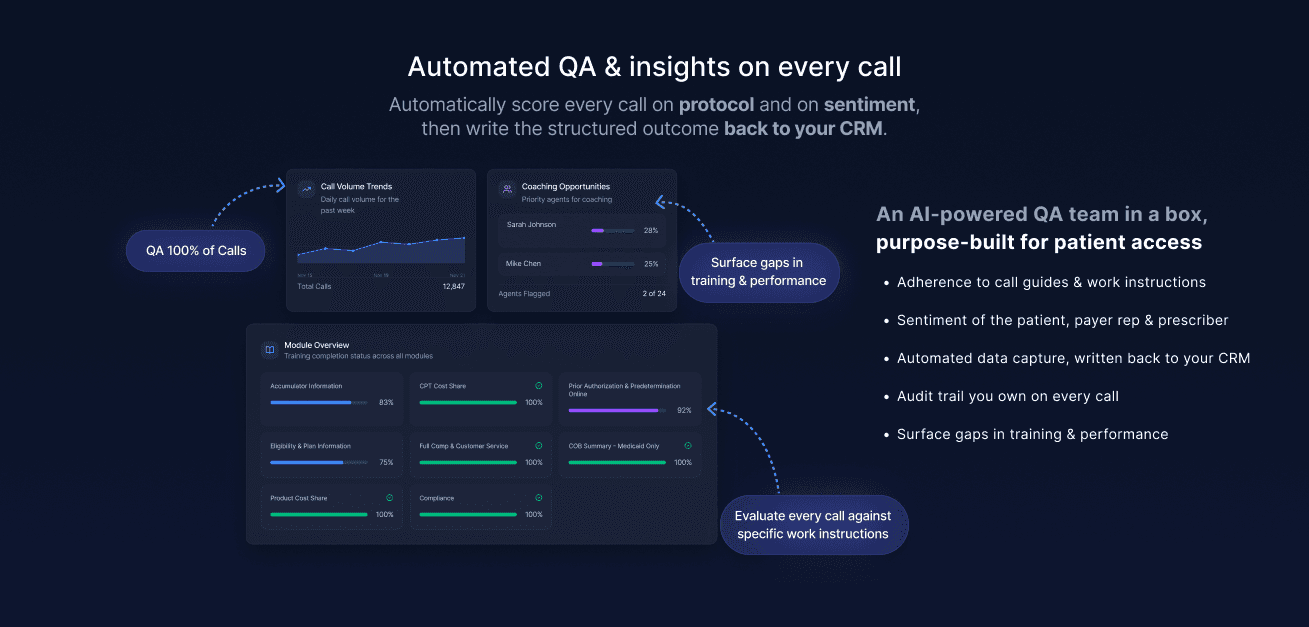

Ready to transform Patient Access?
Ready to transform Patient Access?
NEWSLETTER
@ 2026 Neon Health (Belay, Inc).
AI-powered patient access automation
for leading pharma enterprises.
NEWSLETTER
@ 2026 Neon Health (Belay, Inc).
AI-powered patient access automation for leading pharma enterprises.
NEWSLETTER
@ 2026 Neon Health (Belay, Inc).
AI-powered patient access automation
for leading pharma enterprises.