
The Specialty Drug Access Journey: A Complete Guide from Prescription to First Dose
The Specialty Drug Access Journey: A Complete Guide from Prescription to First Dose
Specialty medications account for roughly 2-3% of prescription volume in the United States, yet they represent over half of total drug spending (IQVIA). That concentration of cost reflects the complexity of these therapies: biologics, gene therapies, and specialty injectables that require cold-chain handling, restricted distribution networks, and intensive patient monitoring.
But the real cost is not the drug itself. It is the administrative journey between the moment a physician writes a prescription and the moment a patient receives their first dose. That journey can take three to four weeks. For some therapies, it stretches to months. And at every step, patients drop off.
No single handoff causes the problem. It is the cumulative friction across five to seven transitions between providers, payers, specialty pharmacies, hub programs, and patients. Each transition introduces delay, data re-entry, and abandonment risk. When a patient waits weeks for a prior authorization decision or receives a surprise copay of $500, the prescription that was supposed to change their life sits unfilled.
This guide maps the full specialty drug access journey from prescription to first dose. It covers each step, identifies where breakdowns occur, and explains what technology and process improvements look like at every stage. At Neon Health, we automate each step of this workflow with AI workers. That end-to-end visibility is what makes a complete guide possible: it is drawn from the operational reality of patient access, not from a single vendor's perspective on one piece of the puzzle.
Whether you manage a patient services program at a pharmaceutical manufacturer, run specialty pharmacy operations, or lead patient access at a health system, this guide provides the map.
What Is the Specialty Drug Access Journey?
The specialty drug access journey is the sequence of administrative, clinical, and logistical steps required to move a patient from prescription to first dose of a specialty medication. Unlike traditional prescriptions, which move from physician to retail pharmacy to patient in hours, specialty drugs pass through a complex multi-party workflow that can take weeks.
Several factors drive this complexity:
Clinical complexity: These medications treat serious conditions (cancer, autoimmune diseases, rare genetic disorders) where treatment protocols involve clinical documentation, monitoring requirements, and specific dosing regimens.
Regulatory requirements: Many specialty drugs carry REMS programs, limited distribution requirements, or prescriber certification mandates that add steps before dispensing.
Payer requirements: Most specialty drugs require prior authorization, often with extensive clinical documentation. Step therapy requirements may mandate that patients try less expensive alternatives first.
Financial barriers: Patient out-of-pocket costs for specialty drugs regularly reach hundreds or thousands of dollars per fill, requiring financial assistance navigation.
Handling requirements: Biologics may require cold-chain shipping and storage. Some drugs require reconstitution or compounding. Many need administration training for patients.
Distribution restrictions: Limited distribution drugs (LDDs) are available only through specific specialty pharmacies, adding routing complexity.
The Key Stakeholders
At each stage of the journey, different stakeholders carry the baton:
Stakeholder | Role in the Journey |
|---|---|
Prescriber | Writes the prescription, initiates enrollment, submits prior authorization requests |
Payer | Reviews and approves prior authorization, determines coverage and cost sharing |
Hub program / Manufacturer | Coordinates enrollment, benefits investigation, financial assistance, patient support |
Specialty pharmacy | Verifies insurance, dispenses medication, arranges delivery, provides patient education |
Patient | Completes enrollment, provides consent, receives onboarding, begins therapy |
The Journey at a Glance
The typical specialty drug access workflow follows this sequence:
Prescription > Enrollment > Benefit Verification > Prior Authorization > Financial Assistance > Patient Onboarding > Dispensing and Delivery > Adherence Support
Each step depends on the successful completion of the one before it. A prior authorization cannot begin until benefits are verified. Financial assistance cannot be determined until the patient's cost share is known. And the patient cannot receive the drug until all approvals, financial arrangements, and pharmacy logistics are in place.
For most specialty medications, this process takes three to four weeks from prescription to therapy start. A 2024 study in the Journal of Managed Care & Specialty Pharmacy found that time to treatment initiation averaged 12 to 18 days depending on pharmacy routing, with external pharmacy transfers adding six additional days.
Why This Matters Now
The specialty drug pipeline is accelerating. The FDA is approving more specialty therapies each year, across oncology, immunology, rare diseases, and gene therapy. Each new approval adds patients who must navigate this access journey, often for the first time.
At the same time, payer complexity is increasing. Formulary restrictions, step therapy requirements, and specialty pharmacy network mandates add layers to an already complex workflow. The IQVIA Institute reports that 27% of new prescriptions go unfilled across all medication types. For specialty drugs, where the access journey is longer and more burdensome, that number is likely higher.
The organizations that figure out how to reduce this journey from weeks to days, without sacrificing clinical oversight or regulatory compliance, will have a significant competitive advantage. For pharmaceutical manufacturers, faster time-to-therapy means more patients on therapy and better real-world evidence. For specialty pharmacies, it means higher fill rates and revenue. For health systems, it means better patient outcomes and lower downstream costs.
Step 1: Prescription and Enrollment
The journey begins when a physician or specialist writes a prescription for a specialty medication. Unlike a standard prescription sent electronically to a retail pharmacy, specialty prescriptions often trigger an enrollment process.
How Specialty Prescriptions Differ
Most specialty drugs are not available at retail pharmacies. They are dispensed through specialty pharmacies that have the infrastructure for cold-chain storage, REMS (Risk Evaluation and Mitigation Strategy) compliance, and patient monitoring. Many specialty medications are also limited distribution drugs (LDDs), meaning only specific pharmacies are authorized to dispense them.
This means the prescription does not go directly from the physician's EHR to a pharmacy counter. Instead, it is routed to a hub program operated by or on behalf of the pharmaceutical manufacturer. The hub manages the downstream workflow: verifying benefits, submitting prior authorizations, enrolling patients in financial assistance, and coordinating with the dispensing pharmacy.
What Hub Programs Do
Hub programs are the operational backbone of the specialty drug access journey. Operated by pharmaceutical manufacturers (in-house or through third-party vendors), hubs serve as the central coordination point for everything that happens between prescription and first dose.
A typical hub program provides:
Benefits investigation: Verifying coverage, identifying PA requirements, determining patient cost share
Prior authorization support: Gathering clinical documentation, submitting PA requests, managing appeals
Financial assistance coordination: Matching patients to copay cards, PAPs, foundation grants, and bridge programs
Patient education and onboarding: Providing drug education, administration training, and support resources
Adherence management: Refill coordination, check-in calls, side effect monitoring
Reporting: Program performance data for the manufacturer (enrollment rates, time-to-therapy, adherence metrics)
The quality of hub operations directly determines how quickly patients start therapy. A well-run hub with integrated technology can move a patient from enrollment to first dose in days. A fragmented hub relying on faxes, spreadsheets, and phone trees can take weeks for the same patient.
The Enrollment Bottleneck
Hub enrollment is where many access journeys stall before they truly begin. Enrollment typically requires patient consent, insurance information, prescriber details, clinical documentation, and diagnosis codes. In many programs, this information arrives by fax or phone, fragmented across multiple forms.
Common enrollment data elements include:
Patient demographics and contact information
Insurance card images (front and back)
Prescriber NPI and contact details
Diagnosis (ICD-10 code) and clinical indication
Prescribed medication, dose, and frequency
Prior treatment history (for step therapy requirements)
Patient consent for enrollment in support programs
HIPAA authorization for information sharing
Incomplete enrollment blocks everything that follows. Benefit verification cannot begin until enrollment is complete. Prior authorization cannot be submitted until benefits are verified. The clock does not start on the patient's access journey until someone assembles the enrollment packet.
When a form arrives with a missing insurance ID or an illegible fax of the insurance card, the hub must contact the prescriber's office to request the information. This follow-up cycle can add two to five days before the first substantive step (benefit verification) even begins.
Digital enrollment platforms have compressed this step from days to hours. When enrollment is integrated into the prescriber's EHR, the data needed to start the process is captured at the point of prescribing, eliminating manual re-entry and reducing the window between prescription and downstream action. Some platforms now report that the majority of enrollments can be completed in less than a day when digitized.
What to Look For
Organizations evaluating their enrollment process should ask:
How long does it take from prescription to completed enrollment?
What percentage of enrollments require follow-up for missing information?
Is enrollment data flowing electronically to the hub, or is it faxed?
Can enrollment be initiated from within the EHR at the point of prescribing?
How many touch points does the process require from the prescriber's staff?
Step 2: Benefit Verification
Once enrollment is complete, the next step is verifying the patient's insurance coverage for the prescribed medication. Benefit verification (BV) confirms whether the drug is covered, what tier it sits on, whether step therapy applies, and whether prior authorization is required.
Why BV Matters for Specialty Drugs
For traditional medications, eligibility checks are straightforward. An EDI 270/271 transaction confirms active coverage, and the pharmacy adjudicates the claim at the point of sale. For specialty drugs, this is not enough.
Specialty BV must answer therapy-specific questions that standard eligibility checks cannot:
Question | Why It Matters |
|---|---|
Is this specific biologic on formulary? | Non-formulary drugs may require formulary exceptions or alternative therapies |
What tier does the drug sit on? | Tier placement determines patient cost share (often hundreds to thousands of dollars) |
Does step therapy apply? | Patient may need to try and fail cheaper alternatives first |
Is prior authorization required? | Determines whether PA submission is needed before dispensing |
Are there site-of-care restrictions? | Some plans require infusions at specific facility types |
Is a specialty pharmacy network restriction in place? | Determines which pharmacy can dispense the medication |
What is the patient's remaining deductible? | Affects first-fill cost even with copay assistance |
Standard EDI 270/271 transactions return coverage status but miss these therapy-specific details. They confirm that a patient has active insurance. They do not confirm that the plan will pay for this particular drug in this particular clinical scenario.
The consequence of incomplete BV is not just delay. It is compounding errors. If BV misses a step therapy requirement, the PA submission will be denied. If BV returns an incorrect cost share, the patient will receive a financial assistance plan that does not cover their actual out-of-pocket costs. Each downstream step depends on the accuracy of the benefit picture assembled at this stage.
The Cost of Manual BV
Manual benefit verification is time-intensive. The CAQH Index reports that the average healthcare practice spends 12.64 minutes per manual eligibility check. Across the U.S. healthcare system, full automation of eligibility and benefit verification could save $13.9 billion annually.
For specialty pharmacies and hub programs processing hundreds of verifications daily, the staff hours consumed by manual BV directly affect how quickly patients move through the access journey. Every hour spent on phone calls to payer portals is an hour of delayed therapy initiation.
The manual process typically involves a staff member logging into one or more payer portals, navigating to the member's benefit information, and manually transcribing coverage details into the hub's case management system. For patients with multiple insurance plans (primary and secondary), this process doubles. For patients whose coverage has changed since their last visit, the staff member may need to contact the payer by phone, adding hold times that can exceed 30 minutes.
How Automation Transforms BV
Automated BV goes beyond EDI transactions. AI-powered verification systems can navigate payer portals, extract therapy-specific benefit details, identify PA requirements, and return a complete benefit picture in minutes rather than hours. This level of automation requires systems that can interact with payer portals the way a trained human would, adapting to portal changes and extracting unstructured data.
The difference between EDI-based and AI-powered BV is worth understanding:
Capability | EDI 270/271 | AI-Powered BV |
|---|---|---|
Active coverage confirmation | Yes | Yes |
Therapy-specific formulary status | No | Yes |
Step therapy requirements | No | Yes |
PA requirement identification | Limited | Yes |
Patient cost share calculation | Limited | Yes |
Site-of-care restrictions | No | Yes |
Adapts to portal changes | N/A | Yes |
Processing time | Seconds (but incomplete) | Minutes (and comprehensive) |
The result is not just speed. Automated BV produces more complete and accurate benefit information, which reduces downstream surprises: fewer unexpected prior authorization requirements, fewer financial assistance applications based on incorrect cost estimates, and fewer claim denials.
Step 3: Prior Authorization
Prior authorization (PA) is the step that generates the most friction in the specialty drug access journey. It is the process by which a payer reviews and approves (or denies) a prescribed therapy before the pharmacy can dispense it.
The Scale of the PA Burden
The 2024 AMA Prior Authorization Physician Survey found that physicians complete an average of 39 prior authorization requests per week, requiring 13 hours of staff time. Nearly 89% of physicians say prior authorization increases burnout.
For specialty medications, the PA burden is particularly acute. Many specialty drugs require clinical documentation beyond a simple diagnosis code: lab results, imaging reports, prior treatment history, and clinical rationale. Gathering and submitting this documentation often requires coordination between the prescriber, the hub, and the specialty pharmacy.
How PA Delays Treatment
The Surescripts Prior Authorization Challenges Data Brief, based on a 2025 survey of 503 pharmacists and prescribers, found that 87-88% cite prior authorization as the single biggest impediment to faster therapy initiation. Nearly 88% of pharmacists and 70% of prescribers say the process frequently or consistently delays treatment.
A 2023 systematic review in JMCP quantified the delay: prior authorization adds 3.6 to 31 days to treatment initiation depending on the drug class. PA approval rates vary from 19% to 97.5% depending on the therapy and payer, creating uncertainty that cascades through the entire access workflow.
The Denial and Appeals Cycle
When a PA is denied, the access journey does not simply stop. It enters an appeals cycle that adds weeks or months. According to the Surescripts data brief, 51% of prescribers reported increased denials in the past year. Each denial requires additional documentation, clinical justification, and often peer-to-peer review between the prescribing physician and a payer medical director.
For patients, the denial-appeal cycle is where abandonment risk peaks. The combination of uncertainty, delay, and the emotional burden of feeling their treatment is being contested drives many patients to give up.
The Regulatory Landscape
A critical distinction that affects specialty drug PAs: the CMS Interoperability and Prior Authorization Final Rule (CMS-0057-F) establishes new PA decision timeframes (72 hours for expedited requests, 7 calendar days for standard requests) and requires payers to implement electronic PA APIs.
However, drug prior authorizations are explicitly excluded from these requirements. The rule's API mandates, process standards, and decision timeframes apply only to medical items and services. Specialty drug PAs will continue to operate outside these interoperability mandates, meaning the administrative burden for drug PAs is unlikely to benefit from the same regulatory push that is transforming medical PA.
This distinction matters for any organization planning its PA automation strategy. Regulatory relief is not coming for drug PAs. Technology adoption is the primary path to reducing delays.
What Automation Can Do
PA automation platforms can pre-populate submission forms with clinical data from the EHR, route requests to the correct payer portal, and track status in real time. The Surescripts data brief reports that automated PA processing can achieve 27-second approvals, with 68% fewer denials due to insufficient information and 88% fewer appeals.
At Neon Health, our AI workers handle PA submission and tracking as part of the broader access workflow, ensuring that the PA step does not become a standalone bottleneck disconnected from the enrollment, BV, and financial assistance steps that surround it.
Step 4: Financial Assistance and Copay Support
Even after a prior authorization is approved, the patient's access journey can stall at the point of cost. Specialty drugs carry some of the highest out-of-pocket costs in healthcare, and without financial assistance, many patients never fill their prescriptions.
Why Cost Is the Abandonment Trigger
The JMCP systematic review found that cost sharing above $100 is associated with up to 75% abandonment for certain specialty drugs. At copays exceeding $350, abandonment rates climb above 75% for medications like PCSK9 inhibitors.
A 2009 JMCP study on prescription abandonment showed the relationship between cost and abandonment across specific drug classes. For multiple sclerosis medications, the abandonment rate was 5.7% when out-of-pocket costs were below $100, but exceeded 25% when costs rose above $200. For TNF blockers, the odds of abandonment increased 2.3 to 4.4 times when out-of-pocket costs exceeded $100.
With specialty drugs representing over half of total U.S. drug spending, the non-fill gap represents hundreds of billions in unrealized therapeutic value. For pharmaceutical manufacturers, every patient who abandons a prescription is both a lost treatment outcome and a lost revenue event. For health systems, it is a patient whose condition will progress untreated, leading to higher-cost interventions downstream.
Types of Financial Support
The financial assistance landscape for specialty drugs includes several distinct program types:
Program Type | How It Works | Who Qualifies |
|---|---|---|
Manufacturer copay cards | Reduce patient out-of-pocket costs at the pharmacy counter | Commercially insured patients (typically excludes government insurance) |
Patient assistance programs (PAPs) | Provide free or reduced-cost medication directly from the manufacturer | Uninsured or underinsured patients meeting income criteria |
Foundation grants | Third-party foundations cover copays or premiums | Patients meeting disease-specific and financial criteria |
Bridge programs | Supply temporary medication while financial assistance or PA is pending | Patients in the access process who would otherwise wait without therapy |
The Matching Challenge
The complexity of financial assistance is not just that these programs exist. It is that each patient must be matched to the right program based on their insurance type, income level, clinical indication, and the specific drug prescribed.
Consider the decision tree for a single patient:
Commercially insured, high copay: Eligible for manufacturer copay card. Most copay cards cap annual benefit (e.g., $15,000-$25,000). If the patient's annual costs exceed the cap, they need a supplemental source.
Medicare Part D, high cost share: Cannot use manufacturer copay cards (Anti-Kickback Statute restrictions). Needs foundation grant or PAP. Foundation funds are limited and may have enrollment windows.
Medicaid: Typically low or no cost share, but may face formulary restrictions or step therapy requirements that create access barriers.
Uninsured: Eligible for manufacturer PAP (free drug). Requires income documentation and application processing that can take two to four weeks.
Dual-eligible (Medicare + Medicaid): Complex eligibility rules that vary by state. May qualify for Extra Help/Low-Income Subsidy.
Each of these pathways has its own application process, eligibility criteria, and processing timeline. A patient who is matched to the wrong program wastes days or weeks before being redirected to the correct one.
Bridge Programs: Covering the Gap
Bridge programs deserve special attention because they address a unique problem: what happens when a patient is approved for therapy but financial assistance or PA is still processing?
Without a bridge program, the patient waits. With a bridge program, the manufacturer provides a temporary supply of the medication (typically 30 to 90 days) so that the patient can start therapy while the administrative process catches up. Bridge programs are particularly valuable for conditions where delayed treatment carries clinical risk, such as oncology or autoimmune diseases.
The challenge with bridge programs is operational: someone needs to identify that the patient qualifies, initiate the request, coordinate with the dispensing pharmacy, and track when the bridge supply expires so that the permanent financial assistance is in place before the patient needs a refill.
Automating Financial Assistance
Automating the matching process, so that the right program is identified and enrollment is initiated as soon as the patient's cost share is known, is one of the highest-impact interventions in the access journey. It eliminates the gap between "you owe $800" and "here is how we can help," which is exactly the window where abandonment occurs.
Automated financial assistance systems can:
Evaluate patient eligibility across all available programs simultaneously
Initiate enrollment in the highest-value program without manual research
Track application status and re-check if a foundation fund re-opens
Calculate the patient's true out-of-pocket cost after assistance is applied
Alert the team if a patient's financial assistance is expiring before their next refill
Step 5: Patient Onboarding and Education
After PA approval and financial assistance are in place, the patient is technically cleared to receive their medication. But cleared does not mean ready. Patient onboarding is the step that bridges administrative approval and actual therapy initiation.
The 48-Hour Window
Research on specialty pharmacy onboarding models suggests that patient engagement within 24 to 48 hours of prescription receipt is critical. Patients who receive a comprehensive onboarding call within this window are in a fundamentally different emotional and informational state than patients who receive an automated text message on day three.
Cost anxiety drives much of this urgency. Before copay assistance is confirmed, patients may believe they face thousands in out-of-pocket costs. That anxiety does not wait for a callback. Delay beyond 48 to 72 hours turns anxiety into disengagement, and disengagement into abandonment.
What Onboarding Covers
Effective specialty drug onboarding addresses several needs simultaneously:
Drug education: What the medication does, how it works, realistic timeline for therapeutic effect
Administration training: Self-injection technique, infusion scheduling, reconstitution procedures
Side effect management: What to expect, what requires medical attention, how to manage common reactions
Financial confirmation: Copay amount after assistance, refill costs, program renewal requirements
Logistics: Delivery scheduling, storage requirements (refrigeration, light protection), travel considerations
Support resources: How to reach the hub, pharmacy, and clinical team if questions arise
Onboarding by Therapy Type
The onboarding process varies based on how the medication is administered:
Administration Route | Onboarding Requirements | Typical Timeline |
|---|---|---|
Self-injection (subcutaneous) | Injection technique training, sharps disposal, storage instructions | 1-2 calls before first dose |
Infusion (IV) | Infusion center scheduling, pre-medication protocols, side effect monitoring plan | Coordination with infusion site, 1-2 weeks lead time |
Oral specialty | Dosing schedule, food interactions, lab monitoring schedule | 1 call, often combined with delivery coordination |
Inhaled/nebulized | Device training, cleaning procedures, usage technique | 1 call with device demonstration |
For self-injection therapies, onboarding is particularly critical. A patient who is uncomfortable with self-injection technique may delay or skip doses. Effective training covers not just the mechanical steps but also the psychological barriers: needle anxiety, injection site reactions, and what to do when a dose is missed.
The Difference Between Automated and Human Onboarding
A welcome email or automated text message can confirm enrollment. It cannot assess whether a patient understands how to self-inject a biologic, manage cold-chain storage at home, or navigate the emotional weight of starting a complex therapy.
The most effective onboarding programs combine automated logistics (scheduling, reminders, confirmation) with human or AI-powered voice outreach that can respond to patient questions, assess comprehension, and escalate clinical concerns.
Key indicators of effective onboarding include:
First-call reach rate: What percentage of patients are successfully contacted within 48 hours?
Education completion: Did the patient demonstrate understanding of their therapy?
Financial clarity: Does the patient know their out-of-pocket cost after assistance?
Delivery confirmation: Is the patient available to receive and properly store the medication?
Support awareness: Does the patient know who to call with questions?
Neon Health's voice AI workers conduct these onboarding conversations at scale, engaging patients in natural dialogue that covers education, logistics, and emotional support. The AI can assess patient comprehension through conversational cues, identify concerns that require clinical escalation, and document the interaction for the care team.
Step 6: Specialty Pharmacy Dispensing and Delivery
Once the patient is onboarded and all approvals are in place, the specialty pharmacy prepares and ships the medication. This step involves its own set of operational challenges that differ from traditional retail pharmacy dispensing.
How Specialty Dispensing Differs
Specialty pharmacies handle medications that require:
Cold chain management: Many biologics must be stored and shipped at specific temperatures. A break in the cold chain renders the medication unusable.
REMS compliance: Some drugs carry FDA-mandated Risk Evaluation and Mitigation Strategies that require the pharmacy to verify prescriber certification, patient enrollment, and specific dispensing conditions.
Limited distribution: Certain drugs are available only through designated specialty pharmacies, requiring coordination between the hub, the payer's preferred network, and the pharmacy authorized to dispense.
Patient-specific preparation: Compounded or weight-based dosing requires preparation tailored to the individual patient.
Time-to-Fill Challenges
Even after all administrative steps are complete, specialty prescriptions take longer to fill than traditional medications. Surveys show that specialty prescriptions average four or more days to fill, with wait times of seven to ten days not uncommon.
The JMCP study on time to treatment initiation found a striking difference based on pharmacy routing. Patients whose specialty medications were filled at an integrated health system specialty pharmacy received their medication in an average of 12 days from provider order. Patients whose prescriptions were transferred to external specialty pharmacies waited an average of 18 days: six additional days attributable to the transfer process.
The implication is clear. Pharmacy routing decisions, often driven by payer network restrictions rather than clinical considerations, have a measurable impact on how quickly patients start therapy.
Coordination at the Point of Dispense
The specialty pharmacy must coordinate several elements before shipping:
Confirm PA approval is current and has not expired
Verify insurance on file has not changed since benefit verification
Arrange delivery logistics (signature requirements, temperature-controlled shipping, patient availability)
Schedule any required patient training or nursing support for first administration
Confirm financial assistance is applied and the patient's copay is within the expected range
Each of these coordination steps represents a potential delay if information is outdated, missing, or requires re-verification.
The Pharmacy Routing Problem
Where a specialty prescription is filled often has as much impact on time-to-therapy as the clinical or administrative complexity of the case. Payers increasingly mandate that specialty drugs be filled through their preferred specialty pharmacy networks. When the patient's health system has its own specialty pharmacy, a payer mandate to use an external network pharmacy triggers a transfer process.
The JMCP study quantified this impact: from the point a prescription was ready to fill, patients at the integrated pharmacy received their medication in an average of 2 days. Patients whose prescriptions were transferred to external pharmacies waited an average of 12 days from ready-to-fill to receipt. The transfer process itself, not the clinical complexity, accounted for the bulk of the delay.
This is a systemic issue that affects millions of patients. When payer network restrictions override clinical coordination, the patient bears the cost in delayed therapy. Health systems, manufacturers, and pharmacy organizations are increasingly advocating for policies that preserve patient choice and prioritize speed-to-therapy over network economics.
Step 7: Adherence Support and Care Coordination
Getting a patient their first dose is not the finish line. For specialty medications, adherence support and ongoing care coordination are continuous requirements that extend for months or years.
Why Adherence Is the Final Step and the Ongoing Challenge
Specialty medications often treat chronic or complex conditions that require consistent therapy over long periods. Missing doses, delaying refills, or discontinuing therapy prematurely can lead to disease progression, treatment resistance, and the need for more aggressive (and expensive) interventions.
Adherence challenges for specialty drugs differ from those for traditional medications:
Challenge | Why It Occurs | Impact |
|---|---|---|
Complex administration | Self-injection, infusion scheduling, reconstitution | Patients may avoid or delay doses due to discomfort or confusion |
Side effects | Specialty drugs often carry significant side effect profiles | Patients may discontinue without consulting their provider |
Cost burden at refill | Copay assistance may need renewal; formulary changes mid-therapy | Financial surprise at refill triggers abandonment |
Appointment burden | Infusion therapies require repeated clinic visits | Scheduling conflicts lead to missed or delayed doses |
Therapy fatigue | Long treatment durations (months to years) | Motivation declines as initial urgency fades |
Proactive vs. Reactive Support
Traditional adherence programs wait for a missed refill before reaching out. By then, the patient may have already disengaged. Proactive care coordination anticipates adherence risks and intervenes before they become gaps.
The difference between proactive and reactive approaches:
Approach | When It Acts | What It Does | Limitation |
|---|---|---|---|
Reactive | After a missed refill or lapsed appointment | Calls the patient to ask why they missed | Patient may have already decided to discontinue |
Proactive | Before a predicted adherence risk | Contacts the patient to address emerging barriers | Requires predictive analytics and coordination capacity |
Proactive support includes refill reminders timed to the patient's dosing schedule, check-in calls that assess side effects and satisfaction, financial assistance renewal before programs expire, and coordination with the clinical team when therapy modifications may be needed.
For example, a proactive system would identify that a patient's copay assistance program expires in 30 days, re-check eligibility, and initiate re-enrollment before the patient faces a surprise bill at their next refill. Without this, the patient arrives at the pharmacy expecting a $10 copay and discovers it is $1,200. That moment is when many patients abandon ongoing therapy.
Measuring Adherence
Specialty drug adherence is typically measured using several metrics:
Proportion of Days Covered (PDC): The percentage of days in a measurement period that a patient has medication on hand. A PDC of 80% or higher is generally considered adherent.
Medication Possession Ratio (MPR): Similar to PDC but calculated differently; ratio of days supply to total days in the measurement period.
Time to Refill: The gap between when a prescription should be refilled and when it actually is.
Persistence: How long a patient continues therapy without a gap exceeding a defined threshold (typically 30-60 days).
These metrics matter for every stakeholder. Manufacturers need adherence data to demonstrate real-world effectiveness. Payers use adherence metrics to evaluate drug value and inform formulary decisions. Providers need to know which patients are at risk for treatment failure.
The Role of AI and Voice Technology
AI-powered voice outreach can conduct proactive check-in calls at scale, reaching hundreds of patients with personalized conversations that assess adherence, answer questions, and escalate concerns to clinical staff. Unlike automated text reminders, voice conversations can detect hesitation, confusion, or distress in a patient's responses and adapt accordingly.
The advantage of voice over text for adherence support is significant. A text message that says "Your refill is ready" is informational. A voice conversation that asks "How are you feeling on the medication? Have you noticed any side effects?" is therapeutic. It creates a touchpoint where the patient can raise concerns they might not volunteer in a clinic visit or respond to in a text.
At Neon Health, care coordination is the final and ongoing component of our AI workforce. The same AI workers that handled the patient's enrollment, onboarding, and financial assistance continue to engage them through the adherence phase, maintaining continuity across the full access journey.
Where the Journey Breaks Down: Common Bottlenecks and Their Costs
Each step of the specialty drug access journey has characteristic failure modes. Understanding where breakdowns occur most frequently is the first step toward fixing them.
Bottleneck Map
Journey Step | Most Common Failure Mode | Typical Delay | Downstream Cost |
|---|---|---|---|
Enrollment | Incomplete forms, missing clinical documentation | 2-5 days | Delays all downstream steps |
Benefit Verification | Manual portal checks, therapy-specific details missed | 1-3 days | Incorrect cost estimates, unexpected PA requirements |
Prior Authorization | Incomplete submission, payer processing time, denials | 3.6-31 days (JMCP) | Patient abandonment, clinical deterioration |
Financial Assistance | Program matching errors, slow enrollment | 2-7 days | Sticker shock drives 75% abandonment above $350 OOP |
Patient Onboarding | Delayed outreach, automated-only communication | 1-3 days | Disengagement within 48-72 hours |
Dispensing | External pharmacy transfers, cold chain logistics | 4-10 days | 6-day delay for external transfers (JMCP) |
Adherence | Missed refills, side effects, therapy fatigue | Ongoing | Disease progression, treatment resistance |
The Cumulative Effect
The total delay is not the sum of each step's average. It is the sum of each step's worst case, because steps are sequential. A two-day enrollment delay followed by a three-day BV delay followed by a fourteen-day PA process followed by a five-day financial assistance enrollment means the patient waits 24 days before their prescription even reaches the pharmacy.
According to the Surescripts data brief, 87% of pharmacists and 89% of prescribers believe prior authorization negatively impacts health outcomes. Nineteen percent of both groups reported serious adverse events linked to medication prior authorization delays.
The Human Cost
Behind every delay statistic is a patient whose condition may be progressing. For oncology patients, delayed treatment initiation has been associated with increased mortality (JMCP). For rheumatoid arthritis patients, delayed initiation of disease-modifying treatments increases joint damage risk. For patients with multiple sclerosis, gaps in therapy can allow disease progression that is not reversible once treatment restarts.
The JMCP systematic review found that for every $10 increase in copayment, discontinuation risk increased 13-14% for certain medications. These are not abstract numbers. They represent patients who stop taking medications that were prescribed to treat serious conditions.
The clinician burden compounds the patient impact. According to the AMA survey, 40% of physicians have staff who work exclusively on prior authorizations. That is staff capacity entirely consumed by administrative processes rather than patient care. When those staff members are overwhelmed, PA submissions are delayed, and the patient wait time grows.
The Financial Cost to the System
The costs of a broken access journey extend beyond individual patients:
For manufacturers: Every abandoned prescription is lost revenue and a failed patient outcome that may affect real-world evidence data.
For specialty pharmacies: Inventory prepared for patients who never fill creates waste. Staff time spent on incomplete workflows has no revenue return.
For health systems: Patients who do not receive timely specialty therapy present later with more advanced disease, requiring costlier interventions.
For payers: Delayed therapy can lead to emergency department visits, hospitalizations, and disease progression that costs more than the specialty drug would have.
The total cost of access friction is difficult to quantify precisely because it spans multiple stakeholders and time horizons. But the scale is clear: with specialty drugs representing over half of total U.S. drug spending, even small improvements in fill rates translate to billions in therapeutic value delivered.
How Technology Is Transforming Each Step
The specialty drug access journey has historically been a manual process: phone calls, faxes, portal logins, and spreadsheets connecting the various stakeholders. Technology is changing each step, with different solutions addressing different parts of the workflow.
Automation Across the Journey
Journey Step | Manual Process | Automated Alternative | Measured Impact |
|---|---|---|---|
Enrollment | Faxed forms, phone intake, data re-entry | Digital enrollment integrated with EHR | Hours instead of days; reduced missing data |
Benefit Verification | Portal-by-portal manual checks, EDI 270/271 | AI-powered therapy-specific verification | 12.64 min per check eliminated (CAQH) |
Prior Authorization | Manual form completion, fax submission, phone follow-up | Electronic PA with auto-population from EHR | 27-second approvals possible (Surescripts) |
Financial Assistance | Manual program research, paper applications | Automated program matching and enrollment | Eliminates gap between cost shock and assistance |
Onboarding | Scheduled nurse callbacks, printed materials | AI-powered voice and digital outreach within 24-48 hours | Engages patients before disengagement window |
Dispensing | Manual coordination between hub, pharmacy, patient | Integrated pharmacy workflow management | 6-day reduction with integrated systems (JMCP) |
Adherence | Reactive refill reminders, periodic check-ins | Proactive AI care coordination and voice outreach | Continuous engagement vs. intervention after missed doses |
Point Solutions vs. End-to-End Automation
Most technology in the patient access space addresses a single step. A PA automation vendor handles prior authorization. A BV platform handles benefit verification. A patient engagement tool handles onboarding and adherence.
The limitation of point solutions is that they do not address the handoffs between steps. A PA that is approved in 27 seconds still delays therapy if the financial assistance enrollment takes five days because the systems are disconnected.
End-to-end automation connects each step so that data flows continuously from enrollment through adherence. When benefit verification identifies a high copay, financial assistance enrollment begins immediately. When PA is approved, the pharmacy is notified and dispensing preparation starts the same day. When the patient receives their medication, the onboarding conversation is already scheduled.
Neon Health's AI workforce approach is built on this principle. Rather than automating individual steps with separate tools, our AI workers move through the entire access workflow, handling each step as part of a continuous process. The result is that improvements in one step cascade through the entire journey rather than creating faster islands surrounded by manual handoffs.
The Role of AI Agents
The emerging category of AI agents in healthcare represents a shift from automation that follows predefined rules to AI that can reason about complex situations. In the patient access context, AI agents can:
Navigate payer portals that change their layouts and workflows without breaking
Engage patients in natural voice conversations that adapt to their questions and concerns
Coordinate between multiple stakeholders (prescriber, payer, pharmacy, patient) without human intervention for routine cases
Escalate complex exceptions to human staff with full context, so staff handle only the cases that require judgment
This is different from traditional RPA (robotic process automation), which follows scripted paths and breaks when portals change. AI agents operate more like trained staff who understand the process and can adapt to variations.
Capability | Traditional RPA | AI Agents |
|---|---|---|
Portal navigation | Scripted paths, breaks when UI changes | Adapts to layout and workflow changes |
Patient communication | Pre-recorded messages, decision trees | Natural conversation, responds to questions |
Exception handling | Fails to queue for human review | Resolves routine exceptions, escalates complex ones with context |
Cross-step coordination | Separate bots per step, no shared context | Carries context across the full workflow |
Learning | Manual rule updates by developers | Improves from patterns across cases |
What "Fully Automated" Actually Means
Full automation of the specialty drug access journey does not mean removing humans from the process. It means ensuring that humans are involved only where their judgment is genuinely needed.
In a fully automated access workflow:
Routine cases (clear insurance, straightforward PA, standard copay assistance) flow from enrollment to dispensing with no human intervention. AI workers handle each step, hand off data to the next, and alert the patient at each milestone.
Complex cases (prior authorization denials, unusual insurance configurations, clinical exceptions) are escalated to human staff with full context. The staff member receives a case summary, recommended next steps, and all relevant documentation, rather than starting from scratch.
Edge cases (patients with multiple comorbidities affecting drug interactions, unusual payer configurations, cross-border coverage) are flagged early so that the team can prioritize them.
The goal is not zero human involvement. It is zero wasted human time. When a staff member spends 12 minutes on a benefit verification call that an AI worker could handle in seconds, that is 12 minutes not spent on a patient who needs clinical judgment or emotional support.
Neon Health's AI workforce approach is designed around this principle. AI workers handle the high-volume, routine tasks across the entire access journey. Human staff focus on the exceptions that require expertise, empathy, or creative problem-solving.
Frequently Asked Questions
How long does the specialty drug access journey typically take?
Most prescribers and specialty pharmacists report that it takes three to four weeks from prescription to therapy start for new specialty medications. A JMCP study measured 12 to 18 days depending on pharmacy routing. The timeline varies based on PA requirements, insurance complexity, and the specific drug prescribed.
Why are specialty drug prior authorizations excluded from CMS interoperability rules?
The CMS-0057-F final rule excludes drug prior authorizations because the standards, processes, and decision timeframes for drug PAs differ from those for medical items and services. This means the rule's 72-hour expedited and 7-day standard decision requirements do not apply to specialty drug PAs.
What is the biggest cause of specialty prescription abandonment?
Patient cost sharing is the primary driver. The JMCP systematic review found that cost sharing above $100 is associated with up to 75% abandonment for certain specialty drugs. When out-of-pocket costs exceed $350, abandonment rates climb above 75% for specific medication classes.
How can technology reduce time-to-therapy for specialty medications?
Automation at each step of the access journey reduces cumulative delays: digital enrollment integrated with the EHR, AI-powered benefit verification beyond EDI 270/271, electronic prior authorization with auto-population, automated financial assistance matching, and AI-powered patient outreach within 48 hours. The Surescripts data brief shows that PA automation alone can achieve 27-second approvals with 41% lower abandonment.
What is the role of hub programs in specialty drug access?
Hub programs coordinate the full access journey on behalf of the pharmaceutical manufacturer. They manage enrollment, benefit verification, prior authorization support, financial assistance enrollment, and patient support services. Hubs serve as the operational hub connecting prescribers, payers, specialty pharmacies, and patients through a single coordination point.
Key Takeaways
Specialty drugs represent 2-3% of prescription volume but over half of total U.S. drug spending, and the administrative journey from prescription to first dose typically takes three to four weeks.
The access journey involves seven sequential steps (enrollment, BV, PA, financial assistance, onboarding, dispensing, adherence), each with its own failure modes that compound into cumulative delay.
Prior authorization is the single biggest bottleneck: physicians spend 13 hours per week on PA, and 87-88% of pharmacists and prescribers cite it as the primary impediment to therapy initiation.
Cost sharing is the primary driver of prescription abandonment, with rates exceeding 75% when out-of-pocket costs surpass $350 for certain specialty drugs.
CMS-0057-F establishes electronic PA requirements and faster decision timeframes, but explicitly excludes drug prior authorizations, meaning technology adoption rather than regulation will drive improvement.
Integrated specialty pharmacies achieve therapy initiation six days faster than external pharmacy transfers, demonstrating that routing and coordination decisions directly affect patient outcomes.
End-to-end automation that connects each step of the access journey delivers greater impact than point solutions that optimize individual steps in isolation.
Closing
The specialty drug access journey is not a single problem. It is a chain of handoffs, each with its own stakeholders, failure modes, and improvement opportunities. Fixing one step while leaving the others manual does not transform the patient experience. It just moves the bottleneck.
The organizations that map, measure, and automate this chain will define the next era of patient access. They will reduce time-to-therapy from weeks to days, catch patients before cost shock drives abandonment, and maintain engagement through the long arc of specialty treatment.
Learn how Neon Health's AI workforce automates the full specialty drug access journey at neonhealth.com.
Sources
IQVIA Institute. "Understanding the Use of Medicines in the U.S. 2025." 2025. https://www.iqvia.com/insights/the-iqvia-institute/reports-and-publications/reports/understanding-the-use-of-medicines-in-the-us-2025
Hung A, Blalock DV, Miller J, et al. "The association between cost sharing, prior authorization, and specialty drug utilization: A systematic review." Journal of Managed Care & Specialty Pharmacy. 2023;29(5):449-468. https://pmc.ncbi.nlm.nih.gov/articles/PMC10388011/
American Medical Association. "2024 AMA Prior Authorization Physician Survey." December 2024. https://www.ama-assn.org/system/files/prior-authorization-survey.pdf
Surescripts. "Prior Authorization Challenges & Solutions: Data Brief." 2025. https://surescripts.com/prior-authorization-challenges-data
Centers for Medicare & Medicaid Services. "CMS Interoperability and Prior Authorization Final Rule (CMS-0057-F)." https://www.cms.gov/newsroom/fact-sheets/cms-interoperability-prior-authorization-final-rule-cms-0057-f
Koenig S, Shea C, Gessner M, et al. "Comparison of time to treatment initiation of specialty medications between an integrated health system specialty pharmacy and external specialty pharmacies." Journal of Managed Care & Specialty Pharmacy. 2024;30(4):352-360. https://www.jmcp.org/doi/10.18553/jmcp.2024.30.4.352
Gleason PP, Starner CI, Gunderson BW, Schafer JA, Sarran HS. "Association of prescription abandonment with cost share for high-cost specialty pharmacy medications." Journal of Managed Care Pharmacy. 2009;15(8):648-658. https://pmc.ncbi.nlm.nih.gov/articles/PMC10441203/
CAQH. "CAQH Index: Operating Cost Measures for the U.S. Healthcare System." 2024. https://www.caqh.org/explorations/caqh-index
Specialty medications account for roughly 2-3% of prescription volume in the United States, yet they represent over half of total drug spending (IQVIA). That concentration of cost reflects the complexity of these therapies: biologics, gene therapies, and specialty injectables that require cold-chain handling, restricted distribution networks, and intensive patient monitoring.
But the real cost is not the drug itself. It is the administrative journey between the moment a physician writes a prescription and the moment a patient receives their first dose. That journey can take three to four weeks. For some therapies, it stretches to months. And at every step, patients drop off.
No single handoff causes the problem. It is the cumulative friction across five to seven transitions between providers, payers, specialty pharmacies, hub programs, and patients. Each transition introduces delay, data re-entry, and abandonment risk. When a patient waits weeks for a prior authorization decision or receives a surprise copay of $500, the prescription that was supposed to change their life sits unfilled.
This guide maps the full specialty drug access journey from prescription to first dose. It covers each step, identifies where breakdowns occur, and explains what technology and process improvements look like at every stage. At Neon Health, we automate each step of this workflow with AI workers. That end-to-end visibility is what makes a complete guide possible: it is drawn from the operational reality of patient access, not from a single vendor's perspective on one piece of the puzzle.
Whether you manage a patient services program at a pharmaceutical manufacturer, run specialty pharmacy operations, or lead patient access at a health system, this guide provides the map.
What Is the Specialty Drug Access Journey?
The specialty drug access journey is the sequence of administrative, clinical, and logistical steps required to move a patient from prescription to first dose of a specialty medication. Unlike traditional prescriptions, which move from physician to retail pharmacy to patient in hours, specialty drugs pass through a complex multi-party workflow that can take weeks.
Several factors drive this complexity:
Clinical complexity: These medications treat serious conditions (cancer, autoimmune diseases, rare genetic disorders) where treatment protocols involve clinical documentation, monitoring requirements, and specific dosing regimens.
Regulatory requirements: Many specialty drugs carry REMS programs, limited distribution requirements, or prescriber certification mandates that add steps before dispensing.
Payer requirements: Most specialty drugs require prior authorization, often with extensive clinical documentation. Step therapy requirements may mandate that patients try less expensive alternatives first.
Financial barriers: Patient out-of-pocket costs for specialty drugs regularly reach hundreds or thousands of dollars per fill, requiring financial assistance navigation.
Handling requirements: Biologics may require cold-chain shipping and storage. Some drugs require reconstitution or compounding. Many need administration training for patients.
Distribution restrictions: Limited distribution drugs (LDDs) are available only through specific specialty pharmacies, adding routing complexity.
The Key Stakeholders
At each stage of the journey, different stakeholders carry the baton:
Stakeholder | Role in the Journey |
|---|---|
Prescriber | Writes the prescription, initiates enrollment, submits prior authorization requests |
Payer | Reviews and approves prior authorization, determines coverage and cost sharing |
Hub program / Manufacturer | Coordinates enrollment, benefits investigation, financial assistance, patient support |
Specialty pharmacy | Verifies insurance, dispenses medication, arranges delivery, provides patient education |
Patient | Completes enrollment, provides consent, receives onboarding, begins therapy |
The Journey at a Glance
The typical specialty drug access workflow follows this sequence:
Prescription > Enrollment > Benefit Verification > Prior Authorization > Financial Assistance > Patient Onboarding > Dispensing and Delivery > Adherence Support
Each step depends on the successful completion of the one before it. A prior authorization cannot begin until benefits are verified. Financial assistance cannot be determined until the patient's cost share is known. And the patient cannot receive the drug until all approvals, financial arrangements, and pharmacy logistics are in place.
For most specialty medications, this process takes three to four weeks from prescription to therapy start. A 2024 study in the Journal of Managed Care & Specialty Pharmacy found that time to treatment initiation averaged 12 to 18 days depending on pharmacy routing, with external pharmacy transfers adding six additional days.
Why This Matters Now
The specialty drug pipeline is accelerating. The FDA is approving more specialty therapies each year, across oncology, immunology, rare diseases, and gene therapy. Each new approval adds patients who must navigate this access journey, often for the first time.
At the same time, payer complexity is increasing. Formulary restrictions, step therapy requirements, and specialty pharmacy network mandates add layers to an already complex workflow. The IQVIA Institute reports that 27% of new prescriptions go unfilled across all medication types. For specialty drugs, where the access journey is longer and more burdensome, that number is likely higher.
The organizations that figure out how to reduce this journey from weeks to days, without sacrificing clinical oversight or regulatory compliance, will have a significant competitive advantage. For pharmaceutical manufacturers, faster time-to-therapy means more patients on therapy and better real-world evidence. For specialty pharmacies, it means higher fill rates and revenue. For health systems, it means better patient outcomes and lower downstream costs.
Step 1: Prescription and Enrollment
The journey begins when a physician or specialist writes a prescription for a specialty medication. Unlike a standard prescription sent electronically to a retail pharmacy, specialty prescriptions often trigger an enrollment process.
How Specialty Prescriptions Differ
Most specialty drugs are not available at retail pharmacies. They are dispensed through specialty pharmacies that have the infrastructure for cold-chain storage, REMS (Risk Evaluation and Mitigation Strategy) compliance, and patient monitoring. Many specialty medications are also limited distribution drugs (LDDs), meaning only specific pharmacies are authorized to dispense them.
This means the prescription does not go directly from the physician's EHR to a pharmacy counter. Instead, it is routed to a hub program operated by or on behalf of the pharmaceutical manufacturer. The hub manages the downstream workflow: verifying benefits, submitting prior authorizations, enrolling patients in financial assistance, and coordinating with the dispensing pharmacy.
What Hub Programs Do
Hub programs are the operational backbone of the specialty drug access journey. Operated by pharmaceutical manufacturers (in-house or through third-party vendors), hubs serve as the central coordination point for everything that happens between prescription and first dose.
A typical hub program provides:
Benefits investigation: Verifying coverage, identifying PA requirements, determining patient cost share
Prior authorization support: Gathering clinical documentation, submitting PA requests, managing appeals
Financial assistance coordination: Matching patients to copay cards, PAPs, foundation grants, and bridge programs
Patient education and onboarding: Providing drug education, administration training, and support resources
Adherence management: Refill coordination, check-in calls, side effect monitoring
Reporting: Program performance data for the manufacturer (enrollment rates, time-to-therapy, adherence metrics)
The quality of hub operations directly determines how quickly patients start therapy. A well-run hub with integrated technology can move a patient from enrollment to first dose in days. A fragmented hub relying on faxes, spreadsheets, and phone trees can take weeks for the same patient.
The Enrollment Bottleneck
Hub enrollment is where many access journeys stall before they truly begin. Enrollment typically requires patient consent, insurance information, prescriber details, clinical documentation, and diagnosis codes. In many programs, this information arrives by fax or phone, fragmented across multiple forms.
Common enrollment data elements include:
Patient demographics and contact information
Insurance card images (front and back)
Prescriber NPI and contact details
Diagnosis (ICD-10 code) and clinical indication
Prescribed medication, dose, and frequency
Prior treatment history (for step therapy requirements)
Patient consent for enrollment in support programs
HIPAA authorization for information sharing
Incomplete enrollment blocks everything that follows. Benefit verification cannot begin until enrollment is complete. Prior authorization cannot be submitted until benefits are verified. The clock does not start on the patient's access journey until someone assembles the enrollment packet.
When a form arrives with a missing insurance ID or an illegible fax of the insurance card, the hub must contact the prescriber's office to request the information. This follow-up cycle can add two to five days before the first substantive step (benefit verification) even begins.
Digital enrollment platforms have compressed this step from days to hours. When enrollment is integrated into the prescriber's EHR, the data needed to start the process is captured at the point of prescribing, eliminating manual re-entry and reducing the window between prescription and downstream action. Some platforms now report that the majority of enrollments can be completed in less than a day when digitized.
What to Look For
Organizations evaluating their enrollment process should ask:
How long does it take from prescription to completed enrollment?
What percentage of enrollments require follow-up for missing information?
Is enrollment data flowing electronically to the hub, or is it faxed?
Can enrollment be initiated from within the EHR at the point of prescribing?
How many touch points does the process require from the prescriber's staff?
Step 2: Benefit Verification
Once enrollment is complete, the next step is verifying the patient's insurance coverage for the prescribed medication. Benefit verification (BV) confirms whether the drug is covered, what tier it sits on, whether step therapy applies, and whether prior authorization is required.
Why BV Matters for Specialty Drugs
For traditional medications, eligibility checks are straightforward. An EDI 270/271 transaction confirms active coverage, and the pharmacy adjudicates the claim at the point of sale. For specialty drugs, this is not enough.
Specialty BV must answer therapy-specific questions that standard eligibility checks cannot:
Question | Why It Matters |
|---|---|
Is this specific biologic on formulary? | Non-formulary drugs may require formulary exceptions or alternative therapies |
What tier does the drug sit on? | Tier placement determines patient cost share (often hundreds to thousands of dollars) |
Does step therapy apply? | Patient may need to try and fail cheaper alternatives first |
Is prior authorization required? | Determines whether PA submission is needed before dispensing |
Are there site-of-care restrictions? | Some plans require infusions at specific facility types |
Is a specialty pharmacy network restriction in place? | Determines which pharmacy can dispense the medication |
What is the patient's remaining deductible? | Affects first-fill cost even with copay assistance |
Standard EDI 270/271 transactions return coverage status but miss these therapy-specific details. They confirm that a patient has active insurance. They do not confirm that the plan will pay for this particular drug in this particular clinical scenario.
The consequence of incomplete BV is not just delay. It is compounding errors. If BV misses a step therapy requirement, the PA submission will be denied. If BV returns an incorrect cost share, the patient will receive a financial assistance plan that does not cover their actual out-of-pocket costs. Each downstream step depends on the accuracy of the benefit picture assembled at this stage.
The Cost of Manual BV
Manual benefit verification is time-intensive. The CAQH Index reports that the average healthcare practice spends 12.64 minutes per manual eligibility check. Across the U.S. healthcare system, full automation of eligibility and benefit verification could save $13.9 billion annually.
For specialty pharmacies and hub programs processing hundreds of verifications daily, the staff hours consumed by manual BV directly affect how quickly patients move through the access journey. Every hour spent on phone calls to payer portals is an hour of delayed therapy initiation.
The manual process typically involves a staff member logging into one or more payer portals, navigating to the member's benefit information, and manually transcribing coverage details into the hub's case management system. For patients with multiple insurance plans (primary and secondary), this process doubles. For patients whose coverage has changed since their last visit, the staff member may need to contact the payer by phone, adding hold times that can exceed 30 minutes.
How Automation Transforms BV
Automated BV goes beyond EDI transactions. AI-powered verification systems can navigate payer portals, extract therapy-specific benefit details, identify PA requirements, and return a complete benefit picture in minutes rather than hours. This level of automation requires systems that can interact with payer portals the way a trained human would, adapting to portal changes and extracting unstructured data.
The difference between EDI-based and AI-powered BV is worth understanding:
Capability | EDI 270/271 | AI-Powered BV |
|---|---|---|
Active coverage confirmation | Yes | Yes |
Therapy-specific formulary status | No | Yes |
Step therapy requirements | No | Yes |
PA requirement identification | Limited | Yes |
Patient cost share calculation | Limited | Yes |
Site-of-care restrictions | No | Yes |
Adapts to portal changes | N/A | Yes |
Processing time | Seconds (but incomplete) | Minutes (and comprehensive) |
The result is not just speed. Automated BV produces more complete and accurate benefit information, which reduces downstream surprises: fewer unexpected prior authorization requirements, fewer financial assistance applications based on incorrect cost estimates, and fewer claim denials.
Step 3: Prior Authorization
Prior authorization (PA) is the step that generates the most friction in the specialty drug access journey. It is the process by which a payer reviews and approves (or denies) a prescribed therapy before the pharmacy can dispense it.
The Scale of the PA Burden
The 2024 AMA Prior Authorization Physician Survey found that physicians complete an average of 39 prior authorization requests per week, requiring 13 hours of staff time. Nearly 89% of physicians say prior authorization increases burnout.
For specialty medications, the PA burden is particularly acute. Many specialty drugs require clinical documentation beyond a simple diagnosis code: lab results, imaging reports, prior treatment history, and clinical rationale. Gathering and submitting this documentation often requires coordination between the prescriber, the hub, and the specialty pharmacy.
How PA Delays Treatment
The Surescripts Prior Authorization Challenges Data Brief, based on a 2025 survey of 503 pharmacists and prescribers, found that 87-88% cite prior authorization as the single biggest impediment to faster therapy initiation. Nearly 88% of pharmacists and 70% of prescribers say the process frequently or consistently delays treatment.
A 2023 systematic review in JMCP quantified the delay: prior authorization adds 3.6 to 31 days to treatment initiation depending on the drug class. PA approval rates vary from 19% to 97.5% depending on the therapy and payer, creating uncertainty that cascades through the entire access workflow.
The Denial and Appeals Cycle
When a PA is denied, the access journey does not simply stop. It enters an appeals cycle that adds weeks or months. According to the Surescripts data brief, 51% of prescribers reported increased denials in the past year. Each denial requires additional documentation, clinical justification, and often peer-to-peer review between the prescribing physician and a payer medical director.
For patients, the denial-appeal cycle is where abandonment risk peaks. The combination of uncertainty, delay, and the emotional burden of feeling their treatment is being contested drives many patients to give up.
The Regulatory Landscape
A critical distinction that affects specialty drug PAs: the CMS Interoperability and Prior Authorization Final Rule (CMS-0057-F) establishes new PA decision timeframes (72 hours for expedited requests, 7 calendar days for standard requests) and requires payers to implement electronic PA APIs.
However, drug prior authorizations are explicitly excluded from these requirements. The rule's API mandates, process standards, and decision timeframes apply only to medical items and services. Specialty drug PAs will continue to operate outside these interoperability mandates, meaning the administrative burden for drug PAs is unlikely to benefit from the same regulatory push that is transforming medical PA.
This distinction matters for any organization planning its PA automation strategy. Regulatory relief is not coming for drug PAs. Technology adoption is the primary path to reducing delays.
What Automation Can Do
PA automation platforms can pre-populate submission forms with clinical data from the EHR, route requests to the correct payer portal, and track status in real time. The Surescripts data brief reports that automated PA processing can achieve 27-second approvals, with 68% fewer denials due to insufficient information and 88% fewer appeals.
At Neon Health, our AI workers handle PA submission and tracking as part of the broader access workflow, ensuring that the PA step does not become a standalone bottleneck disconnected from the enrollment, BV, and financial assistance steps that surround it.
Step 4: Financial Assistance and Copay Support
Even after a prior authorization is approved, the patient's access journey can stall at the point of cost. Specialty drugs carry some of the highest out-of-pocket costs in healthcare, and without financial assistance, many patients never fill their prescriptions.
Why Cost Is the Abandonment Trigger
The JMCP systematic review found that cost sharing above $100 is associated with up to 75% abandonment for certain specialty drugs. At copays exceeding $350, abandonment rates climb above 75% for medications like PCSK9 inhibitors.
A 2009 JMCP study on prescription abandonment showed the relationship between cost and abandonment across specific drug classes. For multiple sclerosis medications, the abandonment rate was 5.7% when out-of-pocket costs were below $100, but exceeded 25% when costs rose above $200. For TNF blockers, the odds of abandonment increased 2.3 to 4.4 times when out-of-pocket costs exceeded $100.
With specialty drugs representing over half of total U.S. drug spending, the non-fill gap represents hundreds of billions in unrealized therapeutic value. For pharmaceutical manufacturers, every patient who abandons a prescription is both a lost treatment outcome and a lost revenue event. For health systems, it is a patient whose condition will progress untreated, leading to higher-cost interventions downstream.
Types of Financial Support
The financial assistance landscape for specialty drugs includes several distinct program types:
Program Type | How It Works | Who Qualifies |
|---|---|---|
Manufacturer copay cards | Reduce patient out-of-pocket costs at the pharmacy counter | Commercially insured patients (typically excludes government insurance) |
Patient assistance programs (PAPs) | Provide free or reduced-cost medication directly from the manufacturer | Uninsured or underinsured patients meeting income criteria |
Foundation grants | Third-party foundations cover copays or premiums | Patients meeting disease-specific and financial criteria |
Bridge programs | Supply temporary medication while financial assistance or PA is pending | Patients in the access process who would otherwise wait without therapy |
The Matching Challenge
The complexity of financial assistance is not just that these programs exist. It is that each patient must be matched to the right program based on their insurance type, income level, clinical indication, and the specific drug prescribed.
Consider the decision tree for a single patient:
Commercially insured, high copay: Eligible for manufacturer copay card. Most copay cards cap annual benefit (e.g., $15,000-$25,000). If the patient's annual costs exceed the cap, they need a supplemental source.
Medicare Part D, high cost share: Cannot use manufacturer copay cards (Anti-Kickback Statute restrictions). Needs foundation grant or PAP. Foundation funds are limited and may have enrollment windows.
Medicaid: Typically low or no cost share, but may face formulary restrictions or step therapy requirements that create access barriers.
Uninsured: Eligible for manufacturer PAP (free drug). Requires income documentation and application processing that can take two to four weeks.
Dual-eligible (Medicare + Medicaid): Complex eligibility rules that vary by state. May qualify for Extra Help/Low-Income Subsidy.
Each of these pathways has its own application process, eligibility criteria, and processing timeline. A patient who is matched to the wrong program wastes days or weeks before being redirected to the correct one.
Bridge Programs: Covering the Gap
Bridge programs deserve special attention because they address a unique problem: what happens when a patient is approved for therapy but financial assistance or PA is still processing?
Without a bridge program, the patient waits. With a bridge program, the manufacturer provides a temporary supply of the medication (typically 30 to 90 days) so that the patient can start therapy while the administrative process catches up. Bridge programs are particularly valuable for conditions where delayed treatment carries clinical risk, such as oncology or autoimmune diseases.
The challenge with bridge programs is operational: someone needs to identify that the patient qualifies, initiate the request, coordinate with the dispensing pharmacy, and track when the bridge supply expires so that the permanent financial assistance is in place before the patient needs a refill.
Automating Financial Assistance
Automating the matching process, so that the right program is identified and enrollment is initiated as soon as the patient's cost share is known, is one of the highest-impact interventions in the access journey. It eliminates the gap between "you owe $800" and "here is how we can help," which is exactly the window where abandonment occurs.
Automated financial assistance systems can:
Evaluate patient eligibility across all available programs simultaneously
Initiate enrollment in the highest-value program without manual research
Track application status and re-check if a foundation fund re-opens
Calculate the patient's true out-of-pocket cost after assistance is applied
Alert the team if a patient's financial assistance is expiring before their next refill
Step 5: Patient Onboarding and Education
After PA approval and financial assistance are in place, the patient is technically cleared to receive their medication. But cleared does not mean ready. Patient onboarding is the step that bridges administrative approval and actual therapy initiation.
The 48-Hour Window
Research on specialty pharmacy onboarding models suggests that patient engagement within 24 to 48 hours of prescription receipt is critical. Patients who receive a comprehensive onboarding call within this window are in a fundamentally different emotional and informational state than patients who receive an automated text message on day three.
Cost anxiety drives much of this urgency. Before copay assistance is confirmed, patients may believe they face thousands in out-of-pocket costs. That anxiety does not wait for a callback. Delay beyond 48 to 72 hours turns anxiety into disengagement, and disengagement into abandonment.
What Onboarding Covers
Effective specialty drug onboarding addresses several needs simultaneously:
Drug education: What the medication does, how it works, realistic timeline for therapeutic effect
Administration training: Self-injection technique, infusion scheduling, reconstitution procedures
Side effect management: What to expect, what requires medical attention, how to manage common reactions
Financial confirmation: Copay amount after assistance, refill costs, program renewal requirements
Logistics: Delivery scheduling, storage requirements (refrigeration, light protection), travel considerations
Support resources: How to reach the hub, pharmacy, and clinical team if questions arise
Onboarding by Therapy Type
The onboarding process varies based on how the medication is administered:
Administration Route | Onboarding Requirements | Typical Timeline |
|---|---|---|
Self-injection (subcutaneous) | Injection technique training, sharps disposal, storage instructions | 1-2 calls before first dose |
Infusion (IV) | Infusion center scheduling, pre-medication protocols, side effect monitoring plan | Coordination with infusion site, 1-2 weeks lead time |
Oral specialty | Dosing schedule, food interactions, lab monitoring schedule | 1 call, often combined with delivery coordination |
Inhaled/nebulized | Device training, cleaning procedures, usage technique | 1 call with device demonstration |
For self-injection therapies, onboarding is particularly critical. A patient who is uncomfortable with self-injection technique may delay or skip doses. Effective training covers not just the mechanical steps but also the psychological barriers: needle anxiety, injection site reactions, and what to do when a dose is missed.
The Difference Between Automated and Human Onboarding
A welcome email or automated text message can confirm enrollment. It cannot assess whether a patient understands how to self-inject a biologic, manage cold-chain storage at home, or navigate the emotional weight of starting a complex therapy.
The most effective onboarding programs combine automated logistics (scheduling, reminders, confirmation) with human or AI-powered voice outreach that can respond to patient questions, assess comprehension, and escalate clinical concerns.
Key indicators of effective onboarding include:
First-call reach rate: What percentage of patients are successfully contacted within 48 hours?
Education completion: Did the patient demonstrate understanding of their therapy?
Financial clarity: Does the patient know their out-of-pocket cost after assistance?
Delivery confirmation: Is the patient available to receive and properly store the medication?
Support awareness: Does the patient know who to call with questions?
Neon Health's voice AI workers conduct these onboarding conversations at scale, engaging patients in natural dialogue that covers education, logistics, and emotional support. The AI can assess patient comprehension through conversational cues, identify concerns that require clinical escalation, and document the interaction for the care team.
Step 6: Specialty Pharmacy Dispensing and Delivery
Once the patient is onboarded and all approvals are in place, the specialty pharmacy prepares and ships the medication. This step involves its own set of operational challenges that differ from traditional retail pharmacy dispensing.
How Specialty Dispensing Differs
Specialty pharmacies handle medications that require:
Cold chain management: Many biologics must be stored and shipped at specific temperatures. A break in the cold chain renders the medication unusable.
REMS compliance: Some drugs carry FDA-mandated Risk Evaluation and Mitigation Strategies that require the pharmacy to verify prescriber certification, patient enrollment, and specific dispensing conditions.
Limited distribution: Certain drugs are available only through designated specialty pharmacies, requiring coordination between the hub, the payer's preferred network, and the pharmacy authorized to dispense.
Patient-specific preparation: Compounded or weight-based dosing requires preparation tailored to the individual patient.
Time-to-Fill Challenges
Even after all administrative steps are complete, specialty prescriptions take longer to fill than traditional medications. Surveys show that specialty prescriptions average four or more days to fill, with wait times of seven to ten days not uncommon.
The JMCP study on time to treatment initiation found a striking difference based on pharmacy routing. Patients whose specialty medications were filled at an integrated health system specialty pharmacy received their medication in an average of 12 days from provider order. Patients whose prescriptions were transferred to external specialty pharmacies waited an average of 18 days: six additional days attributable to the transfer process.
The implication is clear. Pharmacy routing decisions, often driven by payer network restrictions rather than clinical considerations, have a measurable impact on how quickly patients start therapy.
Coordination at the Point of Dispense
The specialty pharmacy must coordinate several elements before shipping:
Confirm PA approval is current and has not expired
Verify insurance on file has not changed since benefit verification
Arrange delivery logistics (signature requirements, temperature-controlled shipping, patient availability)
Schedule any required patient training or nursing support for first administration
Confirm financial assistance is applied and the patient's copay is within the expected range
Each of these coordination steps represents a potential delay if information is outdated, missing, or requires re-verification.
The Pharmacy Routing Problem
Where a specialty prescription is filled often has as much impact on time-to-therapy as the clinical or administrative complexity of the case. Payers increasingly mandate that specialty drugs be filled through their preferred specialty pharmacy networks. When the patient's health system has its own specialty pharmacy, a payer mandate to use an external network pharmacy triggers a transfer process.
The JMCP study quantified this impact: from the point a prescription was ready to fill, patients at the integrated pharmacy received their medication in an average of 2 days. Patients whose prescriptions were transferred to external pharmacies waited an average of 12 days from ready-to-fill to receipt. The transfer process itself, not the clinical complexity, accounted for the bulk of the delay.
This is a systemic issue that affects millions of patients. When payer network restrictions override clinical coordination, the patient bears the cost in delayed therapy. Health systems, manufacturers, and pharmacy organizations are increasingly advocating for policies that preserve patient choice and prioritize speed-to-therapy over network economics.
Step 7: Adherence Support and Care Coordination
Getting a patient their first dose is not the finish line. For specialty medications, adherence support and ongoing care coordination are continuous requirements that extend for months or years.
Why Adherence Is the Final Step and the Ongoing Challenge
Specialty medications often treat chronic or complex conditions that require consistent therapy over long periods. Missing doses, delaying refills, or discontinuing therapy prematurely can lead to disease progression, treatment resistance, and the need for more aggressive (and expensive) interventions.
Adherence challenges for specialty drugs differ from those for traditional medications:
Challenge | Why It Occurs | Impact |
|---|---|---|
Complex administration | Self-injection, infusion scheduling, reconstitution | Patients may avoid or delay doses due to discomfort or confusion |
Side effects | Specialty drugs often carry significant side effect profiles | Patients may discontinue without consulting their provider |
Cost burden at refill | Copay assistance may need renewal; formulary changes mid-therapy | Financial surprise at refill triggers abandonment |
Appointment burden | Infusion therapies require repeated clinic visits | Scheduling conflicts lead to missed or delayed doses |
Therapy fatigue | Long treatment durations (months to years) | Motivation declines as initial urgency fades |
Proactive vs. Reactive Support
Traditional adherence programs wait for a missed refill before reaching out. By then, the patient may have already disengaged. Proactive care coordination anticipates adherence risks and intervenes before they become gaps.
The difference between proactive and reactive approaches:
Approach | When It Acts | What It Does | Limitation |
|---|---|---|---|
Reactive | After a missed refill or lapsed appointment | Calls the patient to ask why they missed | Patient may have already decided to discontinue |
Proactive | Before a predicted adherence risk | Contacts the patient to address emerging barriers | Requires predictive analytics and coordination capacity |
Proactive support includes refill reminders timed to the patient's dosing schedule, check-in calls that assess side effects and satisfaction, financial assistance renewal before programs expire, and coordination with the clinical team when therapy modifications may be needed.
For example, a proactive system would identify that a patient's copay assistance program expires in 30 days, re-check eligibility, and initiate re-enrollment before the patient faces a surprise bill at their next refill. Without this, the patient arrives at the pharmacy expecting a $10 copay and discovers it is $1,200. That moment is when many patients abandon ongoing therapy.
Measuring Adherence
Specialty drug adherence is typically measured using several metrics:
Proportion of Days Covered (PDC): The percentage of days in a measurement period that a patient has medication on hand. A PDC of 80% or higher is generally considered adherent.
Medication Possession Ratio (MPR): Similar to PDC but calculated differently; ratio of days supply to total days in the measurement period.
Time to Refill: The gap between when a prescription should be refilled and when it actually is.
Persistence: How long a patient continues therapy without a gap exceeding a defined threshold (typically 30-60 days).
These metrics matter for every stakeholder. Manufacturers need adherence data to demonstrate real-world effectiveness. Payers use adherence metrics to evaluate drug value and inform formulary decisions. Providers need to know which patients are at risk for treatment failure.
The Role of AI and Voice Technology
AI-powered voice outreach can conduct proactive check-in calls at scale, reaching hundreds of patients with personalized conversations that assess adherence, answer questions, and escalate concerns to clinical staff. Unlike automated text reminders, voice conversations can detect hesitation, confusion, or distress in a patient's responses and adapt accordingly.
The advantage of voice over text for adherence support is significant. A text message that says "Your refill is ready" is informational. A voice conversation that asks "How are you feeling on the medication? Have you noticed any side effects?" is therapeutic. It creates a touchpoint where the patient can raise concerns they might not volunteer in a clinic visit or respond to in a text.
At Neon Health, care coordination is the final and ongoing component of our AI workforce. The same AI workers that handled the patient's enrollment, onboarding, and financial assistance continue to engage them through the adherence phase, maintaining continuity across the full access journey.
Where the Journey Breaks Down: Common Bottlenecks and Their Costs
Each step of the specialty drug access journey has characteristic failure modes. Understanding where breakdowns occur most frequently is the first step toward fixing them.
Bottleneck Map
Journey Step | Most Common Failure Mode | Typical Delay | Downstream Cost |
|---|---|---|---|
Enrollment | Incomplete forms, missing clinical documentation | 2-5 days | Delays all downstream steps |
Benefit Verification | Manual portal checks, therapy-specific details missed | 1-3 days | Incorrect cost estimates, unexpected PA requirements |
Prior Authorization | Incomplete submission, payer processing time, denials | 3.6-31 days (JMCP) | Patient abandonment, clinical deterioration |
Financial Assistance | Program matching errors, slow enrollment | 2-7 days | Sticker shock drives 75% abandonment above $350 OOP |
Patient Onboarding | Delayed outreach, automated-only communication | 1-3 days | Disengagement within 48-72 hours |
Dispensing | External pharmacy transfers, cold chain logistics | 4-10 days | 6-day delay for external transfers (JMCP) |
Adherence | Missed refills, side effects, therapy fatigue | Ongoing | Disease progression, treatment resistance |
The Cumulative Effect
The total delay is not the sum of each step's average. It is the sum of each step's worst case, because steps are sequential. A two-day enrollment delay followed by a three-day BV delay followed by a fourteen-day PA process followed by a five-day financial assistance enrollment means the patient waits 24 days before their prescription even reaches the pharmacy.
According to the Surescripts data brief, 87% of pharmacists and 89% of prescribers believe prior authorization negatively impacts health outcomes. Nineteen percent of both groups reported serious adverse events linked to medication prior authorization delays.
The Human Cost
Behind every delay statistic is a patient whose condition may be progressing. For oncology patients, delayed treatment initiation has been associated with increased mortality (JMCP). For rheumatoid arthritis patients, delayed initiation of disease-modifying treatments increases joint damage risk. For patients with multiple sclerosis, gaps in therapy can allow disease progression that is not reversible once treatment restarts.
The JMCP systematic review found that for every $10 increase in copayment, discontinuation risk increased 13-14% for certain medications. These are not abstract numbers. They represent patients who stop taking medications that were prescribed to treat serious conditions.
The clinician burden compounds the patient impact. According to the AMA survey, 40% of physicians have staff who work exclusively on prior authorizations. That is staff capacity entirely consumed by administrative processes rather than patient care. When those staff members are overwhelmed, PA submissions are delayed, and the patient wait time grows.
The Financial Cost to the System
The costs of a broken access journey extend beyond individual patients:
For manufacturers: Every abandoned prescription is lost revenue and a failed patient outcome that may affect real-world evidence data.
For specialty pharmacies: Inventory prepared for patients who never fill creates waste. Staff time spent on incomplete workflows has no revenue return.
For health systems: Patients who do not receive timely specialty therapy present later with more advanced disease, requiring costlier interventions.
For payers: Delayed therapy can lead to emergency department visits, hospitalizations, and disease progression that costs more than the specialty drug would have.
The total cost of access friction is difficult to quantify precisely because it spans multiple stakeholders and time horizons. But the scale is clear: with specialty drugs representing over half of total U.S. drug spending, even small improvements in fill rates translate to billions in therapeutic value delivered.
How Technology Is Transforming Each Step
The specialty drug access journey has historically been a manual process: phone calls, faxes, portal logins, and spreadsheets connecting the various stakeholders. Technology is changing each step, with different solutions addressing different parts of the workflow.
Automation Across the Journey
Journey Step | Manual Process | Automated Alternative | Measured Impact |
|---|---|---|---|
Enrollment | Faxed forms, phone intake, data re-entry | Digital enrollment integrated with EHR | Hours instead of days; reduced missing data |
Benefit Verification | Portal-by-portal manual checks, EDI 270/271 | AI-powered therapy-specific verification | 12.64 min per check eliminated (CAQH) |
Prior Authorization | Manual form completion, fax submission, phone follow-up | Electronic PA with auto-population from EHR | 27-second approvals possible (Surescripts) |
Financial Assistance | Manual program research, paper applications | Automated program matching and enrollment | Eliminates gap between cost shock and assistance |
Onboarding | Scheduled nurse callbacks, printed materials | AI-powered voice and digital outreach within 24-48 hours | Engages patients before disengagement window |
Dispensing | Manual coordination between hub, pharmacy, patient | Integrated pharmacy workflow management | 6-day reduction with integrated systems (JMCP) |
Adherence | Reactive refill reminders, periodic check-ins | Proactive AI care coordination and voice outreach | Continuous engagement vs. intervention after missed doses |
Point Solutions vs. End-to-End Automation
Most technology in the patient access space addresses a single step. A PA automation vendor handles prior authorization. A BV platform handles benefit verification. A patient engagement tool handles onboarding and adherence.
The limitation of point solutions is that they do not address the handoffs between steps. A PA that is approved in 27 seconds still delays therapy if the financial assistance enrollment takes five days because the systems are disconnected.
End-to-end automation connects each step so that data flows continuously from enrollment through adherence. When benefit verification identifies a high copay, financial assistance enrollment begins immediately. When PA is approved, the pharmacy is notified and dispensing preparation starts the same day. When the patient receives their medication, the onboarding conversation is already scheduled.
Neon Health's AI workforce approach is built on this principle. Rather than automating individual steps with separate tools, our AI workers move through the entire access workflow, handling each step as part of a continuous process. The result is that improvements in one step cascade through the entire journey rather than creating faster islands surrounded by manual handoffs.
The Role of AI Agents
The emerging category of AI agents in healthcare represents a shift from automation that follows predefined rules to AI that can reason about complex situations. In the patient access context, AI agents can:
Navigate payer portals that change their layouts and workflows without breaking
Engage patients in natural voice conversations that adapt to their questions and concerns
Coordinate between multiple stakeholders (prescriber, payer, pharmacy, patient) without human intervention for routine cases
Escalate complex exceptions to human staff with full context, so staff handle only the cases that require judgment
This is different from traditional RPA (robotic process automation), which follows scripted paths and breaks when portals change. AI agents operate more like trained staff who understand the process and can adapt to variations.
Capability | Traditional RPA | AI Agents |
|---|---|---|
Portal navigation | Scripted paths, breaks when UI changes | Adapts to layout and workflow changes |
Patient communication | Pre-recorded messages, decision trees | Natural conversation, responds to questions |
Exception handling | Fails to queue for human review | Resolves routine exceptions, escalates complex ones with context |
Cross-step coordination | Separate bots per step, no shared context | Carries context across the full workflow |
Learning | Manual rule updates by developers | Improves from patterns across cases |
What "Fully Automated" Actually Means
Full automation of the specialty drug access journey does not mean removing humans from the process. It means ensuring that humans are involved only where their judgment is genuinely needed.
In a fully automated access workflow:
Routine cases (clear insurance, straightforward PA, standard copay assistance) flow from enrollment to dispensing with no human intervention. AI workers handle each step, hand off data to the next, and alert the patient at each milestone.
Complex cases (prior authorization denials, unusual insurance configurations, clinical exceptions) are escalated to human staff with full context. The staff member receives a case summary, recommended next steps, and all relevant documentation, rather than starting from scratch.
Edge cases (patients with multiple comorbidities affecting drug interactions, unusual payer configurations, cross-border coverage) are flagged early so that the team can prioritize them.
The goal is not zero human involvement. It is zero wasted human time. When a staff member spends 12 minutes on a benefit verification call that an AI worker could handle in seconds, that is 12 minutes not spent on a patient who needs clinical judgment or emotional support.
Neon Health's AI workforce approach is designed around this principle. AI workers handle the high-volume, routine tasks across the entire access journey. Human staff focus on the exceptions that require expertise, empathy, or creative problem-solving.
Frequently Asked Questions
How long does the specialty drug access journey typically take?
Most prescribers and specialty pharmacists report that it takes three to four weeks from prescription to therapy start for new specialty medications. A JMCP study measured 12 to 18 days depending on pharmacy routing. The timeline varies based on PA requirements, insurance complexity, and the specific drug prescribed.
Why are specialty drug prior authorizations excluded from CMS interoperability rules?
The CMS-0057-F final rule excludes drug prior authorizations because the standards, processes, and decision timeframes for drug PAs differ from those for medical items and services. This means the rule's 72-hour expedited and 7-day standard decision requirements do not apply to specialty drug PAs.
What is the biggest cause of specialty prescription abandonment?
Patient cost sharing is the primary driver. The JMCP systematic review found that cost sharing above $100 is associated with up to 75% abandonment for certain specialty drugs. When out-of-pocket costs exceed $350, abandonment rates climb above 75% for specific medication classes.
How can technology reduce time-to-therapy for specialty medications?
Automation at each step of the access journey reduces cumulative delays: digital enrollment integrated with the EHR, AI-powered benefit verification beyond EDI 270/271, electronic prior authorization with auto-population, automated financial assistance matching, and AI-powered patient outreach within 48 hours. The Surescripts data brief shows that PA automation alone can achieve 27-second approvals with 41% lower abandonment.
What is the role of hub programs in specialty drug access?
Hub programs coordinate the full access journey on behalf of the pharmaceutical manufacturer. They manage enrollment, benefit verification, prior authorization support, financial assistance enrollment, and patient support services. Hubs serve as the operational hub connecting prescribers, payers, specialty pharmacies, and patients through a single coordination point.
Key Takeaways
Specialty drugs represent 2-3% of prescription volume but over half of total U.S. drug spending, and the administrative journey from prescription to first dose typically takes three to four weeks.
The access journey involves seven sequential steps (enrollment, BV, PA, financial assistance, onboarding, dispensing, adherence), each with its own failure modes that compound into cumulative delay.
Prior authorization is the single biggest bottleneck: physicians spend 13 hours per week on PA, and 87-88% of pharmacists and prescribers cite it as the primary impediment to therapy initiation.
Cost sharing is the primary driver of prescription abandonment, with rates exceeding 75% when out-of-pocket costs surpass $350 for certain specialty drugs.
CMS-0057-F establishes electronic PA requirements and faster decision timeframes, but explicitly excludes drug prior authorizations, meaning technology adoption rather than regulation will drive improvement.
Integrated specialty pharmacies achieve therapy initiation six days faster than external pharmacy transfers, demonstrating that routing and coordination decisions directly affect patient outcomes.
End-to-end automation that connects each step of the access journey delivers greater impact than point solutions that optimize individual steps in isolation.
Closing
The specialty drug access journey is not a single problem. It is a chain of handoffs, each with its own stakeholders, failure modes, and improvement opportunities. Fixing one step while leaving the others manual does not transform the patient experience. It just moves the bottleneck.
The organizations that map, measure, and automate this chain will define the next era of patient access. They will reduce time-to-therapy from weeks to days, catch patients before cost shock drives abandonment, and maintain engagement through the long arc of specialty treatment.
Learn how Neon Health's AI workforce automates the full specialty drug access journey at neonhealth.com.
Sources
IQVIA Institute. "Understanding the Use of Medicines in the U.S. 2025." 2025. https://www.iqvia.com/insights/the-iqvia-institute/reports-and-publications/reports/understanding-the-use-of-medicines-in-the-us-2025
Hung A, Blalock DV, Miller J, et al. "The association between cost sharing, prior authorization, and specialty drug utilization: A systematic review." Journal of Managed Care & Specialty Pharmacy. 2023;29(5):449-468. https://pmc.ncbi.nlm.nih.gov/articles/PMC10388011/
American Medical Association. "2024 AMA Prior Authorization Physician Survey." December 2024. https://www.ama-assn.org/system/files/prior-authorization-survey.pdf
Surescripts. "Prior Authorization Challenges & Solutions: Data Brief." 2025. https://surescripts.com/prior-authorization-challenges-data
Centers for Medicare & Medicaid Services. "CMS Interoperability and Prior Authorization Final Rule (CMS-0057-F)." https://www.cms.gov/newsroom/fact-sheets/cms-interoperability-prior-authorization-final-rule-cms-0057-f
Koenig S, Shea C, Gessner M, et al. "Comparison of time to treatment initiation of specialty medications between an integrated health system specialty pharmacy and external specialty pharmacies." Journal of Managed Care & Specialty Pharmacy. 2024;30(4):352-360. https://www.jmcp.org/doi/10.18553/jmcp.2024.30.4.352
Gleason PP, Starner CI, Gunderson BW, Schafer JA, Sarran HS. "Association of prescription abandonment with cost share for high-cost specialty pharmacy medications." Journal of Managed Care Pharmacy. 2009;15(8):648-658. https://pmc.ncbi.nlm.nih.gov/articles/PMC10441203/
CAQH. "CAQH Index: Operating Cost Measures for the U.S. Healthcare System." 2024. https://www.caqh.org/explorations/caqh-index
Related articles
Related articles
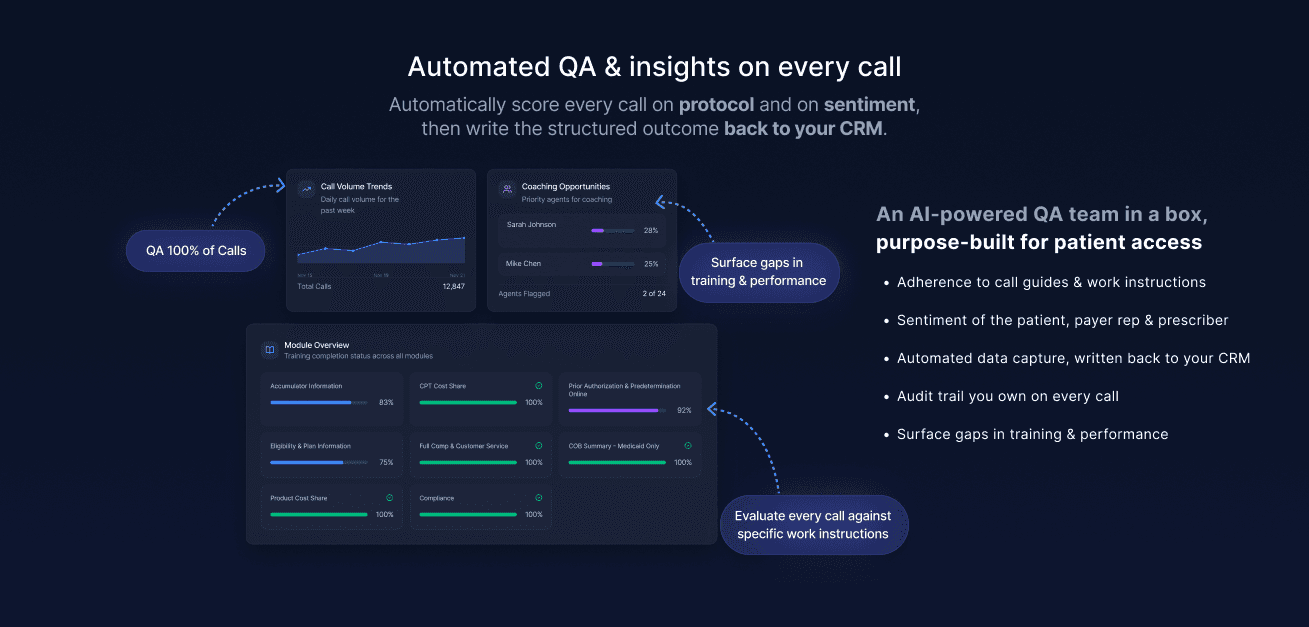

Ready to transform Patient Access?
Ready to transform Patient Access?
NEWSLETTER
@ 2026 Neon Health (Belay, Inc).
AI-powered patient access automation
for leading pharma enterprises.
NEWSLETTER
@ 2026 Neon Health (Belay, Inc).
AI-powered patient access automation for leading pharma enterprises.
NEWSLETTER
@ 2026 Neon Health (Belay, Inc).
AI-powered patient access automation
for leading pharma enterprises.